When LED therapy is appropriate and which procedures it is combined with
CONTENTS:
- What LED therapy is and how it works on the skin
- When LED therapy is appropriate in a cosmetologist’s practice
- Which procedures LED therapy is most often combined with
- Which combinations work for different patient concerns
- When combinations require caution
- What the practical role of LED therapy looks like in a cosmetology office
- Practical takeaway
In aesthetic medicine, LED therapy has long been used not as an isolated procedure but as part of a broader treatment protocol. Its value becomes most apparent when a cosmetologist understands not only the basic mechanism of light exposure but also how to combine it correctly with other techniques depending on the skin condition, the treatment objective, and the stage of care.
When working with acne, reactive skin, dull complexion, post-procedure recovery, or age-related changes, LED therapy serves different functions. It may be included to reduce the inflammatory response and support the skin after cleansing, chemical peels, or device-based procedures. This role is especially evident in acne management: the American Academy of Dermatology notes that acne affects up to 50 million people in the United States each year, while a global Pierre Fabre study estimates worldwide acne prevalence at 20.5%. In the 16–24 age group, the rate reached 28.3%, and in the 25–39 age group, 19.3%. For a specialist, this means LED therapy should be evaluated not in isolation, but as part of a well-designed cosmetology protocol.
What LED therapy is and how it works on the skin
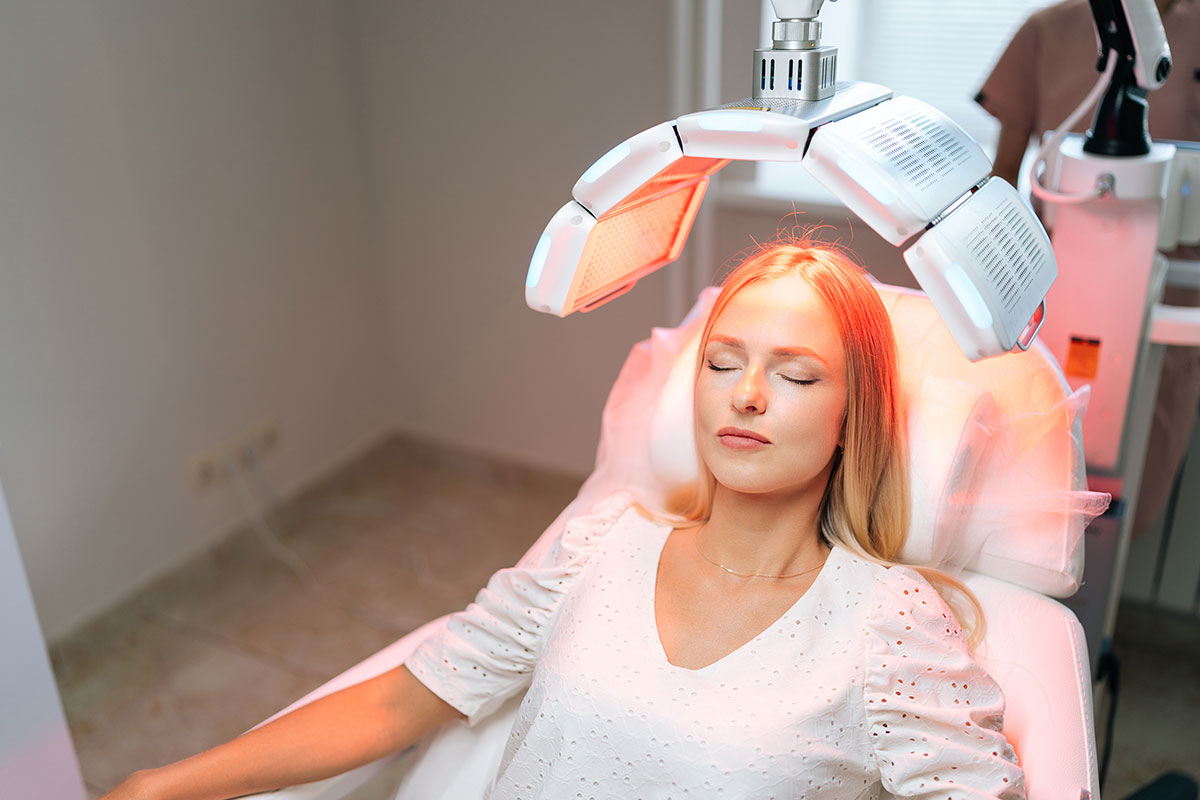
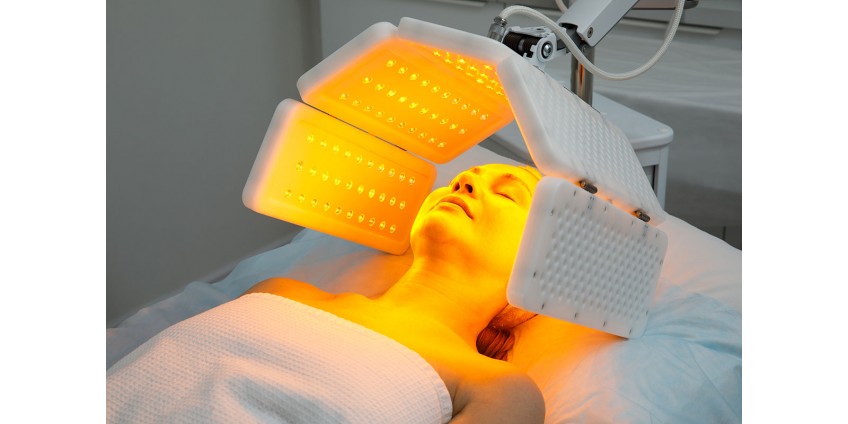
LED therapy is a light-based treatment method used in cosmetology for acne, skin reactivity, uneven tone, reduced firmness, and post-procedure recovery programs. Its principle is that different light wavelengths interact with the skin in different ways, so the mode is selected according to the specific objective of the treatment protocol.
Unlike more intensive light technologies, LED therapy does not involve aggressive воздействие on the skin surface. For this reason, it is often included in skincare, recovery, and combination programs when it is important to work gently with inflammation, microcirculation, firmness, and the overall condition of the skin.
What the method is based on
Each light spectrum has its own practical purpose. One mode is used more often for breakouts, while another is chosen when the goal is to support regeneration, reduce redness, or complement an anti-aging protocol. That is why LED therapy is evaluated not as a universal procedure, but as a tool integrated into a specific patient treatment scenario.
Which light colors are used in cosmetology
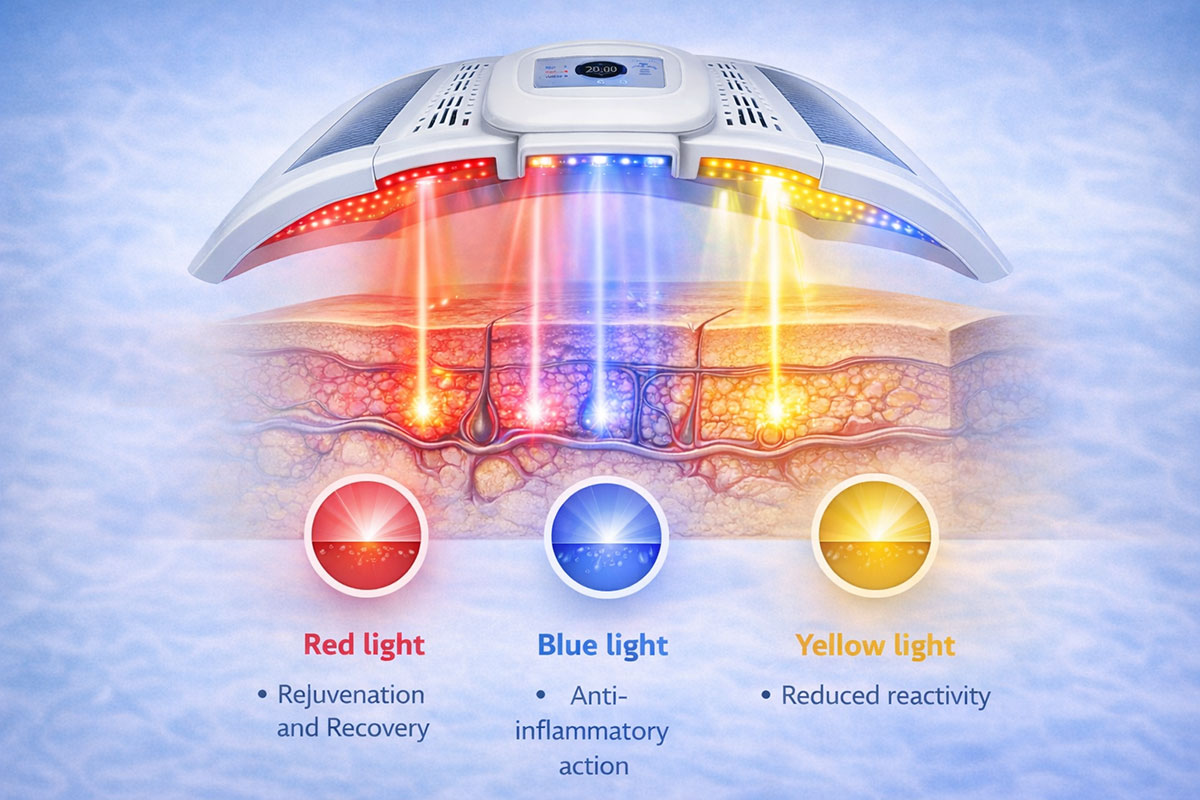
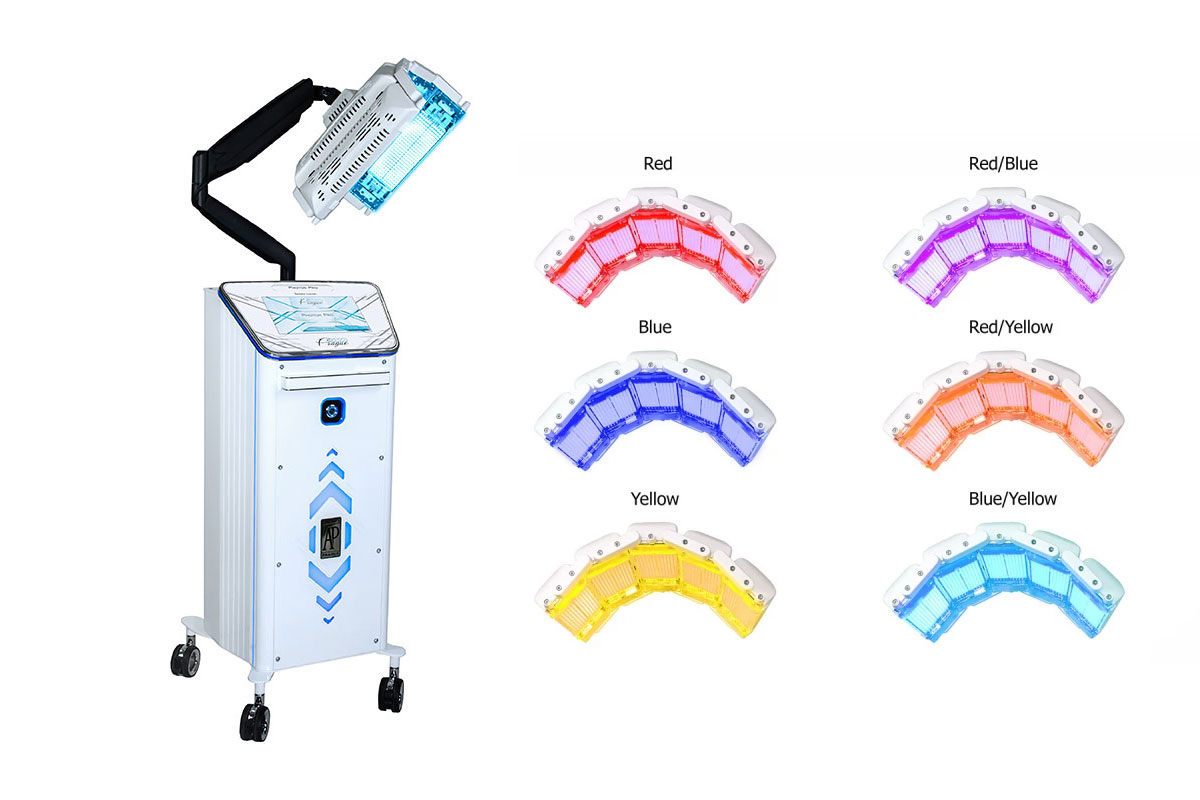
Several light spectra are used in LED therapy because different modes make it possible to address different skin conditions. In cosmetology practice, the most commonly used options are red, blue, and yellow light, as well as combined modes such as red-blue, red-yellow, and blue-yellow.
- Red light is usually included in protocols focused on skin recovery, support of skin firmness, and age-related concerns.
- Blue light is more often used in care for oily and problematic skin, particularly for breakouts and inflammatory lesions.
- Yellow light is appropriate when the cosmetologist is working with redness, skin sensitivity, and uneven skin tone.
- Combined modes make it possible to address several goals within one protocol — for example, working simultaneously with inflammation, skin reactivity, and the need for recovery.
In practice, this means the cosmetologist chooses the mode not by color alone, but according to the clinical objective, the skin condition, and the role of the procedure within the overall care protocol.
The Alvi Prague product line also includes led light therapy machine options that work with these spectra, so LED protocols can be integrated into both standalone skincare treatments and combination programs.
When LED therapy is appropriate in a cosmetologist’s practice
LED therapy is included in a protocol when controlled and gentle skin exposure is needed without additional trauma. It is most often used for acne, increased sensitivity, dull complexion, reduced skin firmness, as well as during the recovery period after procedures accompanied by redness or temporary reactivity.
In cosmetology practice, this method is rarely seen as a universal stand-alone solution. Much more often, LED therapy works as a supportive or finishing stage within a broader protocol. It is included when the goal is to reduce the intensity of the inflammatory response, calm the skin after cleansing or peeling, complement care for problematic skin, or strengthen a course of restorative procedures.
This is also supported by data from a 2024 review on the use of visible light for acne vulgaris, which reported that 92% of patients achieved partial remission of acne lesions with light therapy. At the same time, this figure should be interpreted as review data rather than a universal outcome for every clinical case.
LED therapy is convenient because it can be adapted to different patient concerns. For oily and problematic skin, it is included in one type of regimen; for sensitive and reactive skin, in another; and in anti-aging protocols, it performs a different function altogether.
Which procedures LED therapy is most often combined with
LED therapy is most often used as part of a combination protocol — when the goal is to gently complete the main procedure or supplement skincare without putting extra stress on the skin.
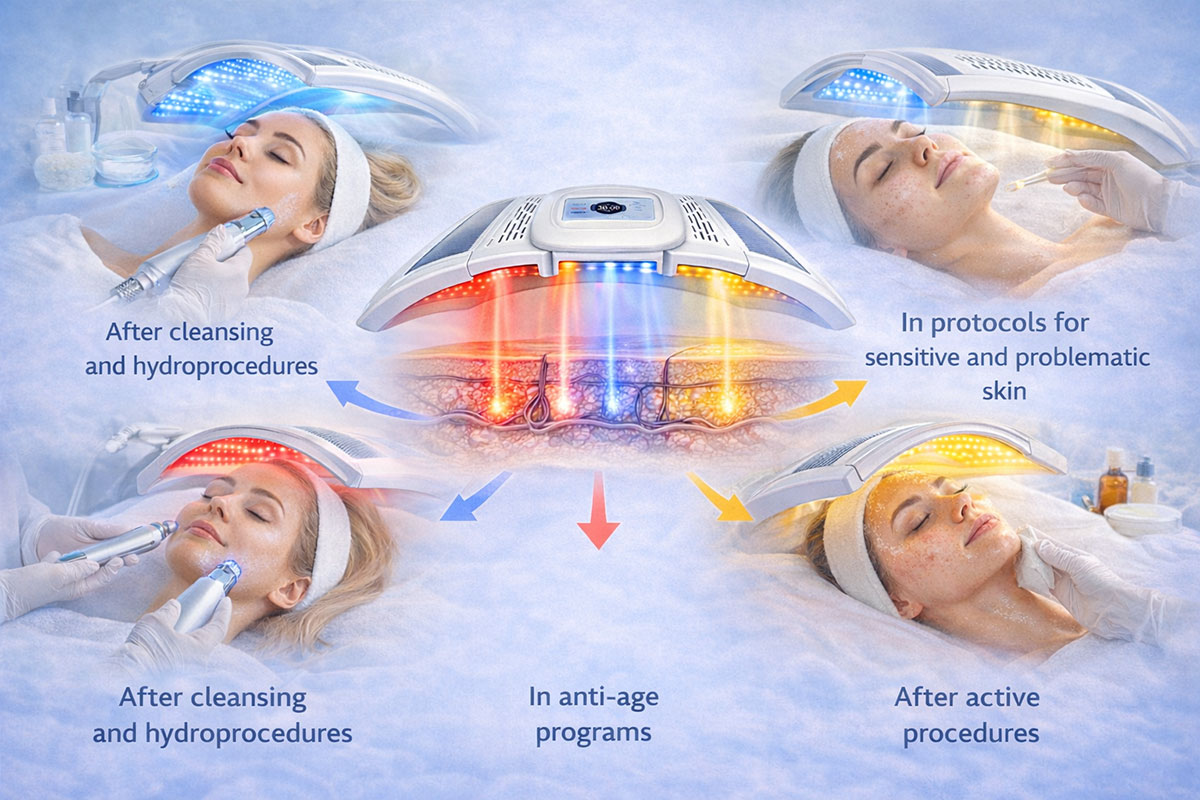
After cleansing and hydro-based procedures
LED therapy is often combined with hydro peeling, ultrasonic cleansing, and atraumatic skincare protocols. After such procedures, it is included when the goal is to calm the skin and reduce temporary reactivity.
In protocols for sensitive and problematic skin
When working with sensitive and problematic skin, LED therapy is combined with serums, soothing protocols, as well as acne and post-acne procedures. This format makes it possible to build a more delicate and controlled skincare approach.
In anti-aging programs
In anti-aging programs, LED therapy is combined with RF procedures, microcurrent treatments, and non-aggressive rejuvenation methods. In these regimens, it works as an additional step within a comprehensive treatment course.
After active procedures
LED therapy is also often used after chemical peels, cleansing procedures, and other treatments after which the skin may respond with redness or sensitivity. In such cases, it helps make the final stage of the protocol gentler.
Which combinations work for different patient concerns
LED therapy does not have one universal application scenario. It is combined with different procedures depending on the patient’s concern, the skin condition, and the objective of the protocol.
| Patient concern | Protocol goal | LED therapy | Combined with | Expected effect |
|---|---|---|---|---|
| Acne | Reduce inflammatory manifestations and support care for problematic skin | Blue or red-blue light | Cleansing, soothing serums, protocols for acne-prone skin | Less pronounced skin reactivity, support for the problematic skin protocol |
| Dull skin | Improve the overall appearance of the skin and make the tone more even | Red or red-yellow light | Hydro peeling, atraumatic skincare, light restorative programs | Fresher-looking skin, a more cared-for complexion |
| Recovery after cleansing | Calm the skin after the procedure | Yellow or red-yellow light | Ultrasonic cleansing, atraumatic cleansing, soothing skincare | Less post-procedure discomfort, a gentler completion of the protocol |
| Sensitive skin | Reduce reactivity and support comfortable skincare | Yellow or blue-yellow light | Soothing protocols, delicate serums, non-aggressive skincare procedures | A more comfortable treatment experience, reduced redness |
| Reduced firmness | Support the skin in anti-aging care | Red light | Microcurrent treatments, RF procedures, non-aggressive rejuvenation programs | Integration into an anti-aging course without overloading the skin |
| Recovery care after active procedures | Help the skin transition to the recovery stage | Yellow, red, or combined modes depending on the skin condition | Chemical peels, cleansing procedures, and treatments after which temporary reactivity is possible | More delicate recovery and a more comfortable completion of the procedure |
The table highlights the main point: LED therapy should not be selected formally, but with the specific patient concern and the logic of the entire protocol in mind. The same method can perform different functions — from supporting problematic skin to serving as a finishing stage after active procedures.
When combinations require caution
Despite the gentle nature of LED therapy, combining it with other procedures requires a balanced approach. Before including it in a protocol, the cosmetologist evaluates the skin condition, inflammation activity, sensitivity level, photosensitivity, home-care routine, and the frequency of procedures within the course.
Mistakes often begin at the treatment planning stage. The most typical ones include overly high expectations of LED therapy as a monotherapy, incorrect session frequency, and combining procedures without a clear understanding of the function of each. In this case, effectiveness depends not only on the choice of spectrum, but also on how competently LED therapy is integrated into the overall skincare course.
What the practical role of LED therapy looks like in a cosmetology office
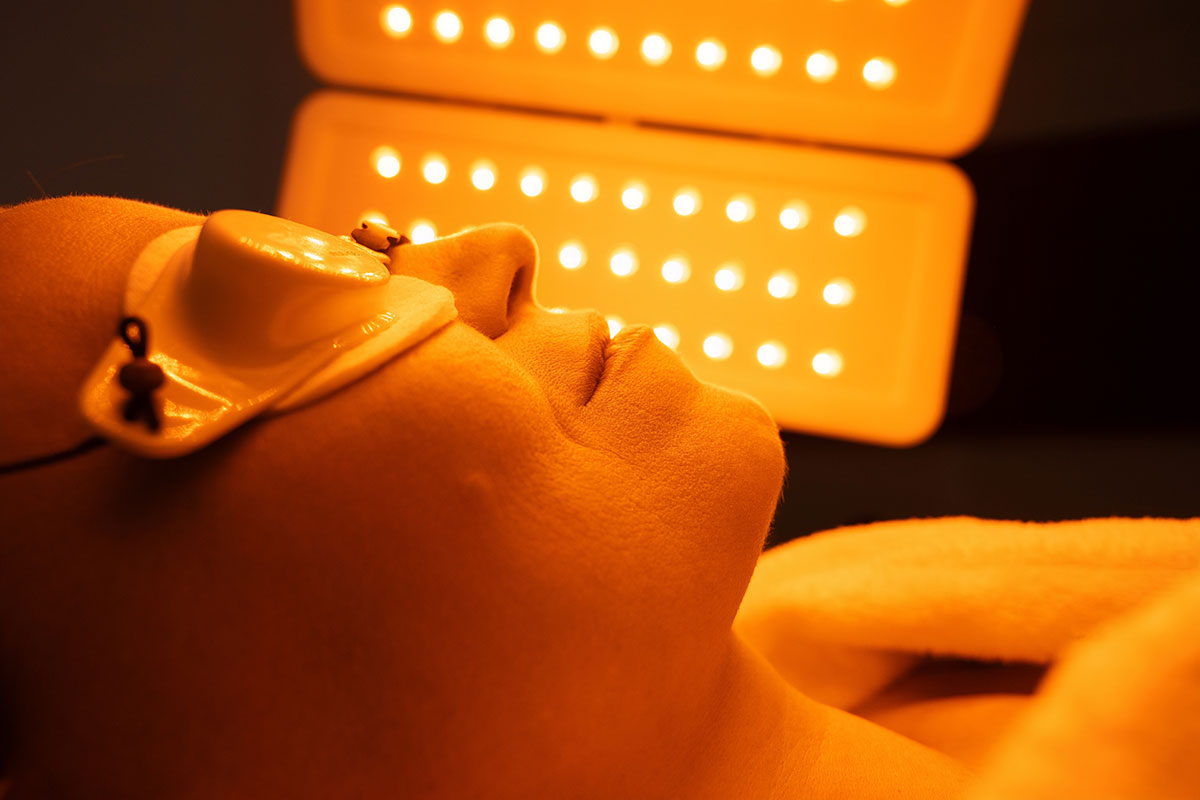
In cosmetology practice, LED therapy is used in several formats: as a standalone session, as the finishing stage of a procedure, as an element of course-based support, or as part of recovery after more active techniques. This makes it possible to integrate it into both basic skincare protocols and combination programs.
From the standpoint of office equipment, this technology is especially relevant for cosmetology offices focused on skincare protocols, salons with an anti-aging emphasis, and clinics where gentle skin support after procedures is important. It can be integrated organically into different care programs without overloading the protocol.
Practical takeaway
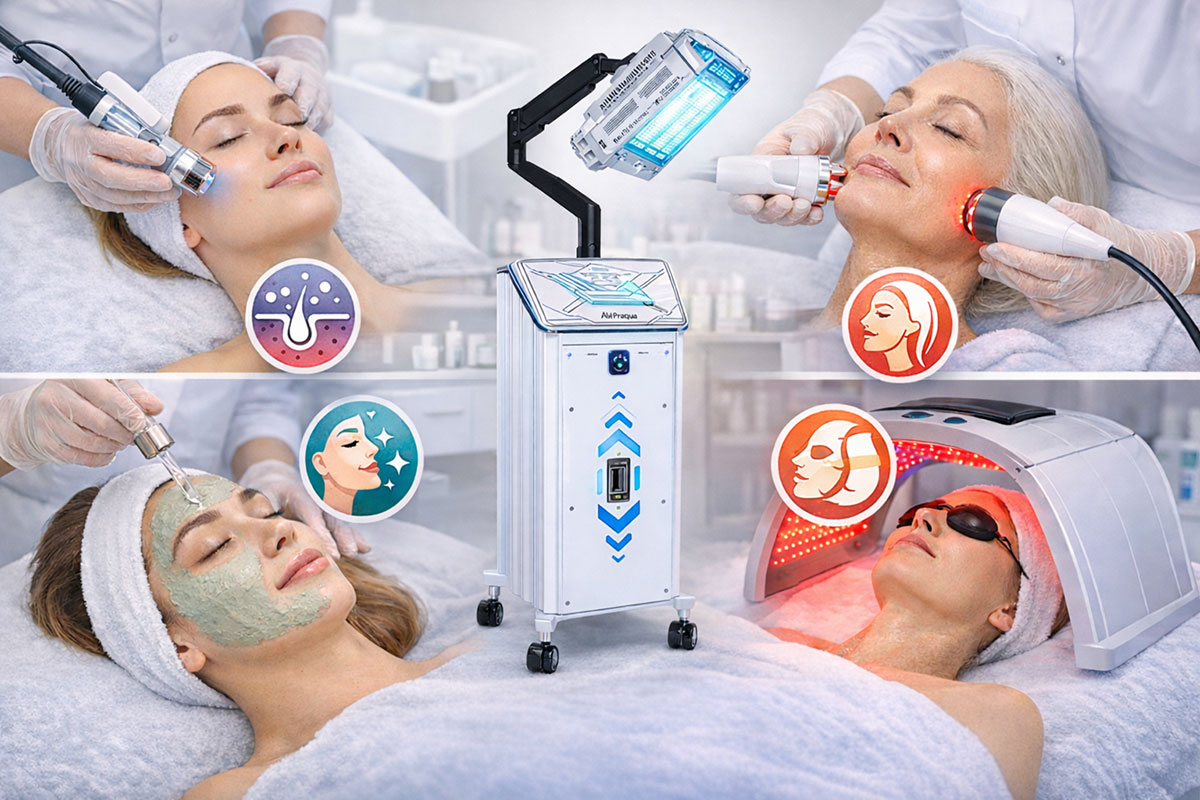
LED therapy works best not as a separate universal procedure, but as part of a competently designed cosmetology protocol. Its role depends on the specific objective — working with problematic, sensitive, dull, or aging skin — as well as the stage at which it is included in the treatment course.
In this case, the result is determined not only by the fact that LED therapy is used, but by the correct selection of indications, light spectrum, and combination with other methods. This approach makes it possible to use it more precisely and appropriately.
For the cosmetologist, LED therapy is a tool that expands treatment scenarios for different skin conditions and provides more options for building combination skincare programs.