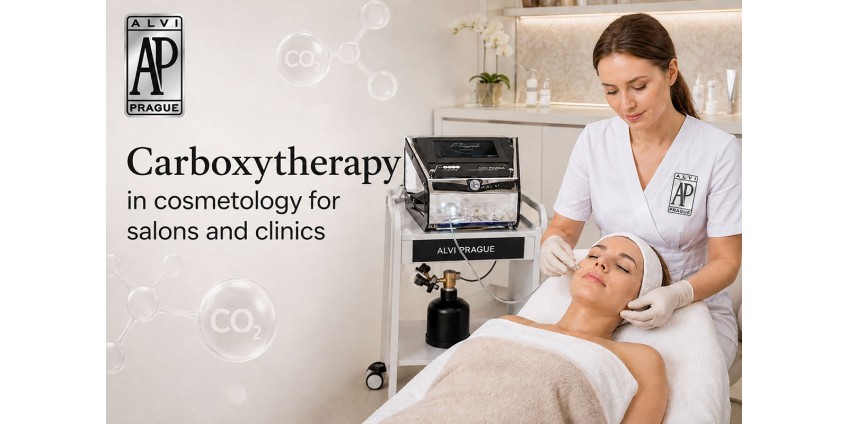
Carboxytherapy in cosmetology for salons and clinics
CONTENTS:
- What carboxytherapy is in cosmetology
- How device-based carboxytherapy works
- What carboxytherapy is used for
- Device-based and injectable carboxytherapy
- Indications and limitations for carboxytherapy
- How carboxytherapy is introduced in a salon or clinic
- How to choose a carboxytherapy format for salon services
- Which procedures carboxytherapy can be combined with
- Frequently asked questions about carboxytherapy
- What carboxytherapy offers a salon or clinic
Carboxytherapy is a method in aesthetic cosmetology that uses carbon dioxide, or CO₂, to work with the skin. It is included in face and body programs when the goal is to address tone, puffiness, firmness, localized aesthetic changes, or the condition of the skin after other procedures. For a salon or clinic, this is not a one-time service “for the price list,” but a procedure that must be properly integrated into skin care courses, anti-aging programs, lymphatic drainage, and body contouring.
Demand for carboxytherapy is shaped from two sides. The client is looking for a procedure with no long recovery period that may improve the appearance of the skin. The cosmetologist evaluates something different: which concerns the method can address, which procedures it can be combined with, what contraindications exist, how to explain the course, and which service format will be clear to the client.
For professional use, it is important to immediately distinguish between device-based and injectable carboxytherapy. They share the same foundation — CO₂ — but differ in the depth of action, specialist requirements, and role in the work of a salon or aesthetic medicine clinic.
What carboxytherapy is in cosmetology
Carboxytherapy is a procedure in which carbon dioxide, or CO₂, is used as a controlled stimulus for a local tissue response. In cosmetology, it is applied to the skin of the face, neck, décolleté, abdomen, thighs, and other areas where there is dull tone, puffiness, reduced firmness, signs of cellulite, scars, or stretch marks.
The history of this method is connected not only with aesthetic medicine. In the 1930s, in Royat, France, carbon dioxide was used in spa medicine for procedures related to the vascular system. Later, interest in CO₂ moved into cosmetology: the method began to be used to improve skin quality, address localized aesthetic changes, and support tissue recovery after intensive procedures.
The essence of carboxytherapy is not surface cleansing or mechanical resurfacing. The method works through the tissue response to an increased concentration of CO₂ in the treatment area. This is why it is relevant when the cosmetologist is working with microcirculation, edema, skin tone, and tissue support within a course of procedures.
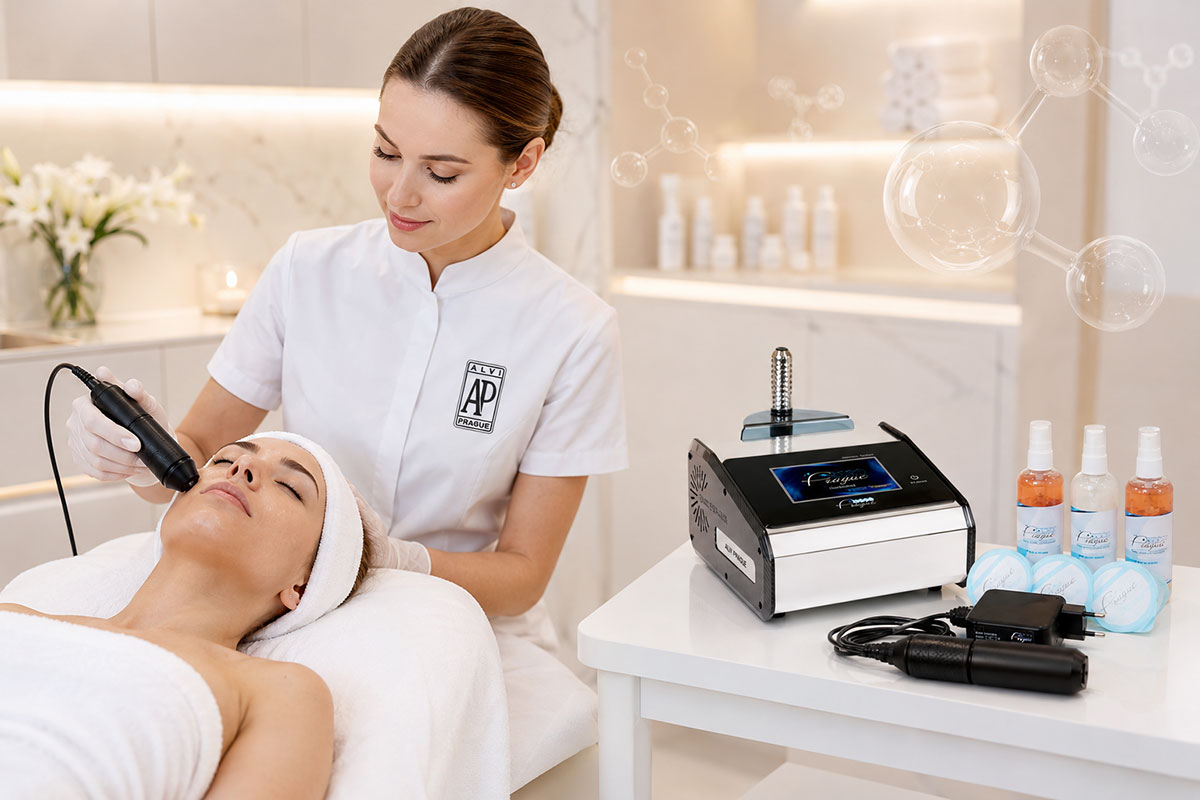
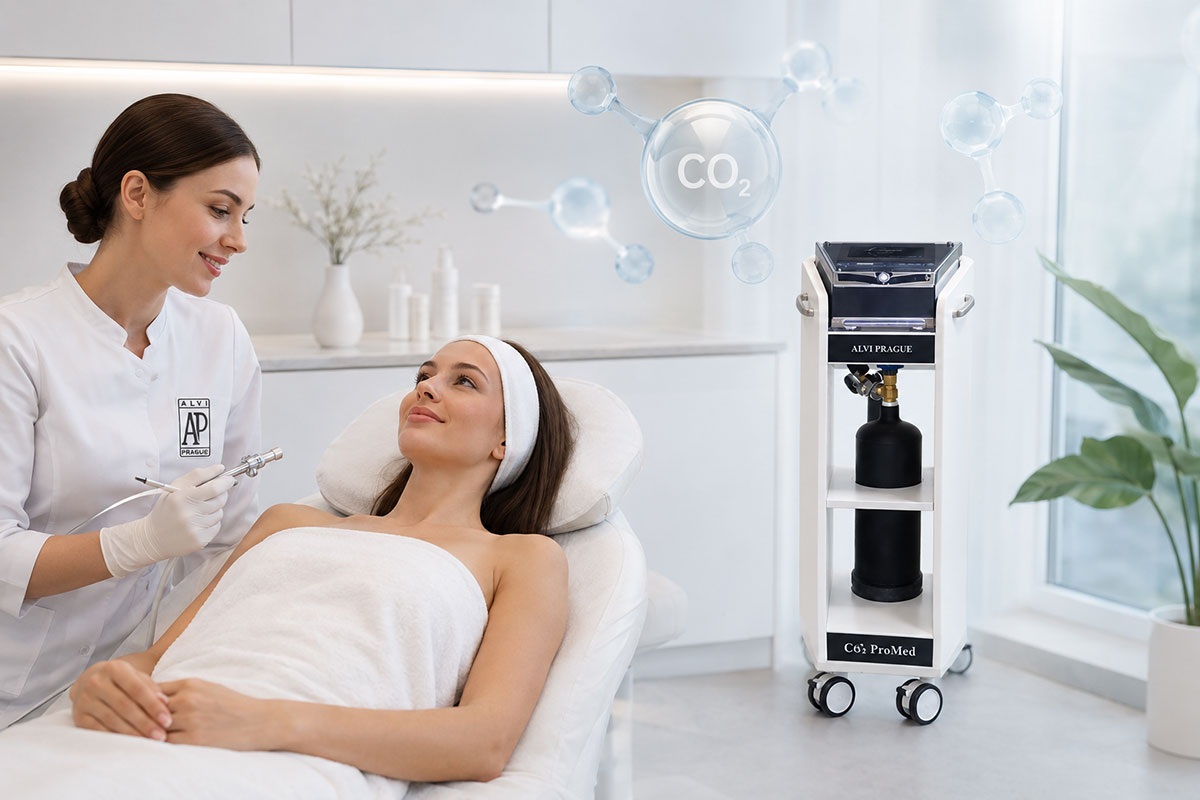
In practice, injectable and device-based carboxytherapy are distinguished. Injectable carboxytherapy involves delivering CO₂ under the skin and requires medical training. Device-based carboxytherapy is used in skin care and aesthetic programs where protocol control, client comfort, procedure repeatability, and the ability to work on different areas are important.
How device-based carboxytherapy works
Device-based carboxytherapy is based on the action of CO₂ without injectable gas delivery. For the cosmetologist, not only the active component itself matters, but also the protocol: the treatment area, procedure duration, skin condition, client sensitivity, combination with other methods, and course objective.
The physiological explanation of CO₂ action is often associated with the Bohr effect, described in 1904. Its essence is that an increase in carbon dioxide concentration affects hemoglobin’s ability to release oxygen to the tissues. For cosmetology, this explains the interest in carboxytherapy as a method associated with local microcirculation, metabolic processes, and the external condition of the skin.
When tissues respond to CO₂, blood circulation, oxygenation, and the lymphatic drainage response may become more active in the treatment area. In clinical publications, carboxytherapy is described among the methods studied for the periorbital area, cellulite, striae, scars, and changes in dermal density. In client-facing articles, these data should be presented without promises, but as an explanation of the mechanism and possible areas of application.
Device-based carboxytherapy differs from invasive methods in its format of action. It does not involve injecting CO₂ under the skin, so it has a different logic of use, a different tissue load, and different requirements for the specialist. For a salon, this makes it possible to include the procedure in regular skin care courses without confusing it with medical invasive protocols.
What carboxytherapy is used for
Carboxytherapy is used in face and body programs when the cosmetologist is working not only with the skin surface, but also with its response to a course of procedures. The main areas include tone, puffiness, firmness, microcirculation, localized aesthetic changes, cellulite, striae, scars, and skin support after other methods.
Carboxytherapy for the face
In facial procedures, the method is used for dull tone, signs of fatigue, puffiness, reduced firmness, and age-related changes. It may be part of an anti-aging course, seasonal skin care, or a skin recovery program after stress, fatigue, or more aggressive procedures. A separate focus is the periorbital area. Studies have examined the use of carboxytherapy for dark circles under the eyes, where microcirculation, thin skin, puffiness, and the vascular component are important. For a salon, this is a delicate area, so the protocol must account for tissue sensitivity and contraindications.
Carboxytherapy for the body
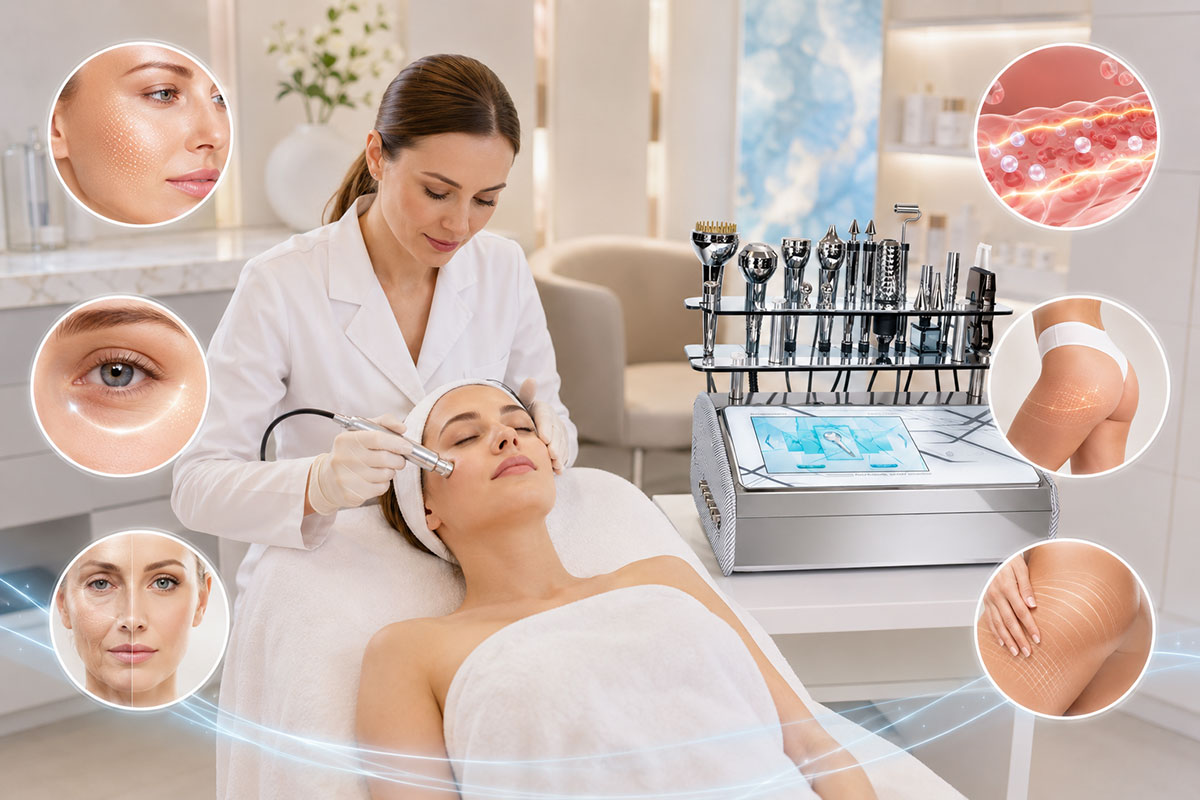
In body programs, carboxytherapy is used for cellulite, pastosity, reduced tone, localized aesthetic changes, scars, and stretch marks. It may be part of a body contouring course when the goal is not only to work with measurements, but also with the condition of the skin. In salon practice, carboxytherapy is often combined with RF procedures, pressotherapy, vacuum massage, or lymphatic drainage programs. This creates a course in which each method has its own function: one works with tone, another with swelling, and a third with texture or localized signs of cellulite.
Device-based and injectable carboxytherapy
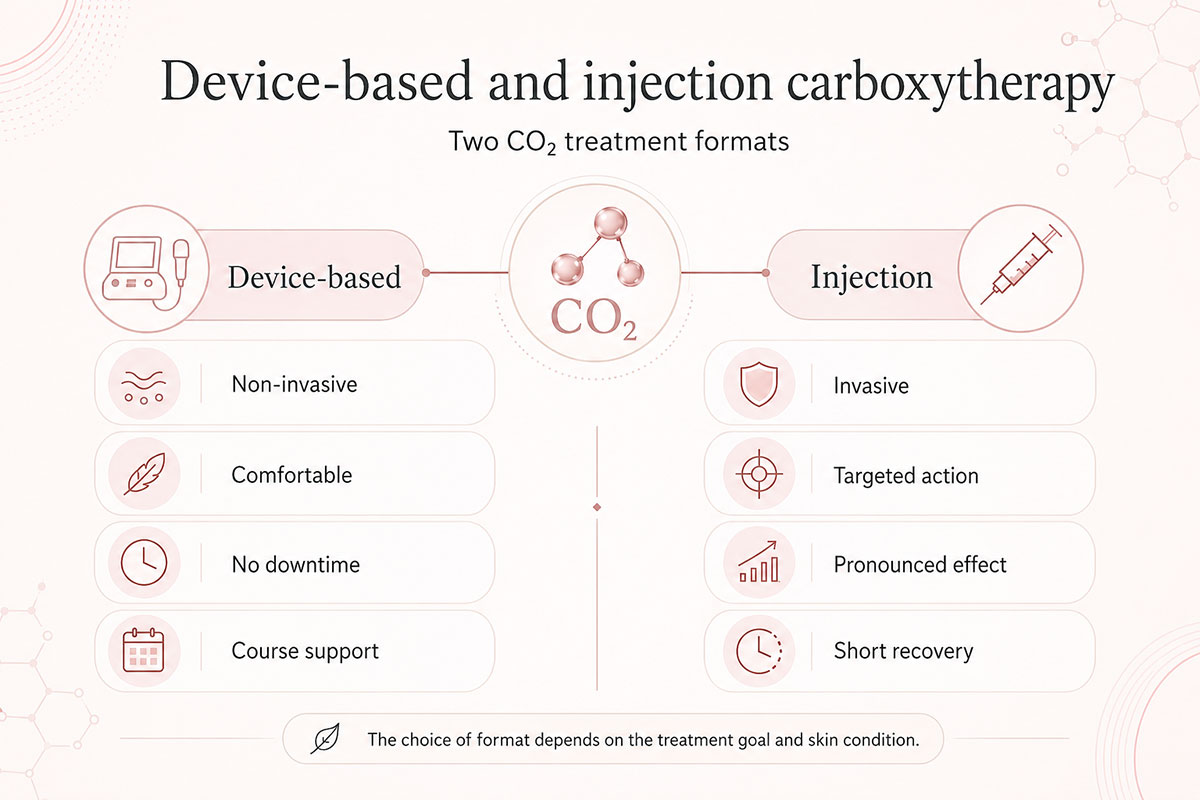
Device-based and injectable carboxytherapy share the same foundation — the use of CO₂ — but differ in the method of action, level of invasiveness, specialist requirements, and place in the service menu. For the salon owner, this difference determines how to position the procedure, who can perform it, and what expectations should be set for the client.
|
Criterion |
Device-based carboxytherapy |
Injectable carboxytherapy |
|
Method of action |
Device-based needle-free or minimally invasive format, depending on the method |
Injectable CO₂ delivery |
|
Level of invasiveness |
Lower |
Higher |
|
Main application |
Skin care and aesthetic programs |
Medical-aesthetic protocols |
|
Service format |
Face and body courses in a salon or clinic |
Procedures requiring medical qualification |
|
Client communication |
Skin care, course-based approach, comfort, combination with other methods |
Medical protocol, indications, limitations, specialist control |
Device-based carboxytherapy is better suited for regular skin care, multi-session programs, and combined courses. It can be offered to clients who want to work on tone, puffiness, skin quality, or localized aesthetic concerns without complex preparation.
Injectable carboxytherapy follows a different logic. It is associated with CO₂ delivery into the tissues, so it requires medical responsibility, assessment of contraindications, and the appropriate qualification. It should not be presented as a direct equivalent of device-based care: this is a separate field with different rules of performance.
For a salon, it is important not to mix these formats in advertising materials and consultations. A device-based protocol should be explained through skin care, course structure, treatment areas, and combinations with other procedures. An injectable protocol should be explained through medical indications, specialist qualification, and risk control.
Indications and limitations for carboxytherapy
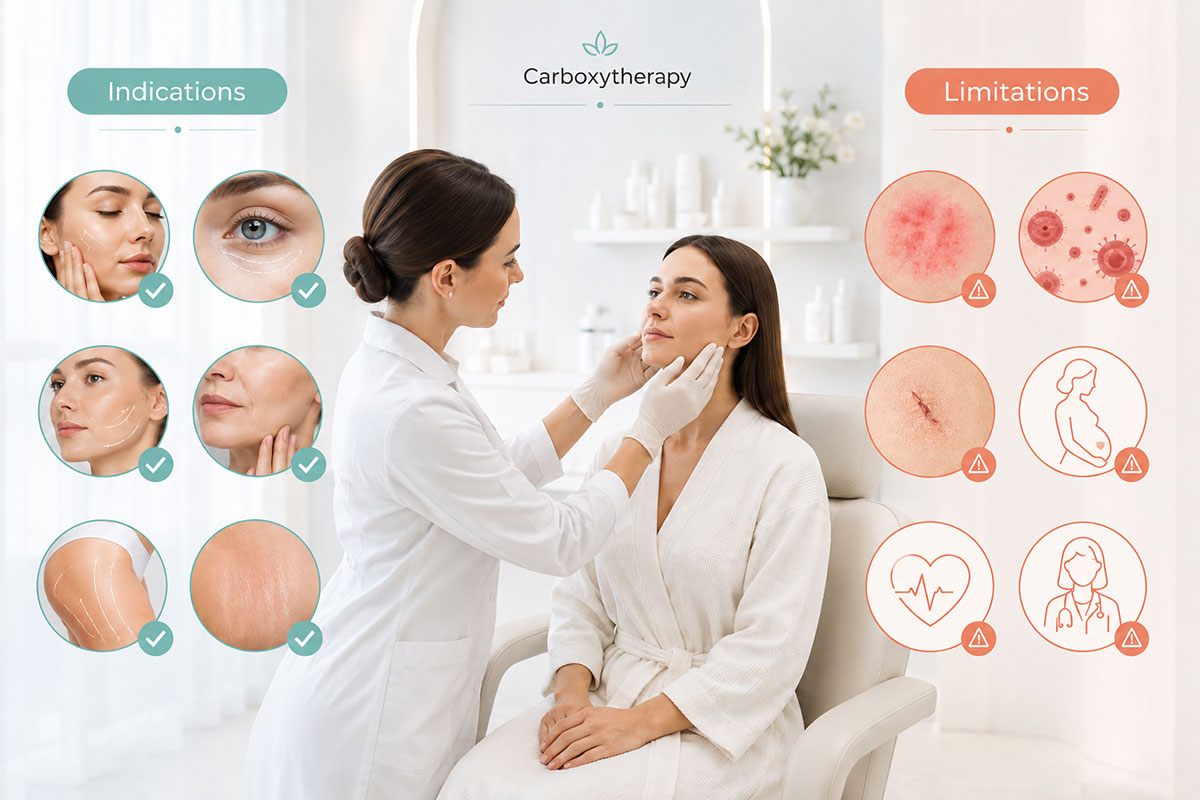
Carboxytherapy is included in a course when there is a need to work with skin quality, puffiness, tone, localized aesthetic concerns, or support after other procedures. It should not be presented as a method suitable for every client. The decision to perform the procedure should be based on the condition of the skin, the treatment area, accompanying methods, and the client’s general condition.
- When the method may be included in a course of procedures
Carboxytherapy may be appropriate for dull skin tone, puffiness, reduced tone, age-related changes, localized aesthetic changes, cellulite, scars, and stretch marks. In facial programs, it is often used as part of anti-aging care or as a preparatory stage before other procedures. In body programs, it is used as an addition to RF, pressotherapy, vacuum massage, or lymphatic drainage. - When the procedure is not performed
Before the procedure, the specialist must assess contraindications. Carboxytherapy is not performed in cases of acute inflammatory processes, active infections, skin damage in the treatment area, pregnancy, oncological diseases, decompensated chronic conditions, or pronounced individual reactions. If the client has chronic diseases, vascular disorders, or recent medical interventions, consultation with a relevant physician is required. For a salon, this section has organizational importance. An initial questionnaire, documentation of contraindications, clear consent for the procedure, and a course description help the specialist avoid selling the service “to everyone” and instead select clients correctly.
How carboxytherapy is introduced in a salon or clinic
Carboxytherapy makes business sense when it is integrated into the service system. It can be offered as a standalone procedure or as a stage in a course: for the face, body, lymphatic drainage, anti-aging care, body contouring, support after peels, RF, or other device-based methods.
Before launch, it is necessary to determine which clients the service is created for. One salon may focus on the face: puffiness, dull tone, neck, décolleté, and the periorbital area. Another may focus on the body: cellulite, pastosity, reduced tone, and programs after weight loss. A clinic may use carboxytherapy as part of broader aesthetic medicine protocols.
After that, it is worth describing 2–3 courses that are easy to explain to the client. For example: a facial course, a body course, and a combined program with lymphatic drainage. In each course, the areas, intervals, number of sessions, order of combination with other procedures, and criteria used by the specialist to assess progress should be defined.
A separate consultation script is also needed. The client should understand that carboxytherapy does not replace all device-based methods, does not produce the same response in every case, and requires a course. This type of communication reduces the risk of inflated expectations and increases trust in the specialist.

How to choose a carboxytherapy format for salon services
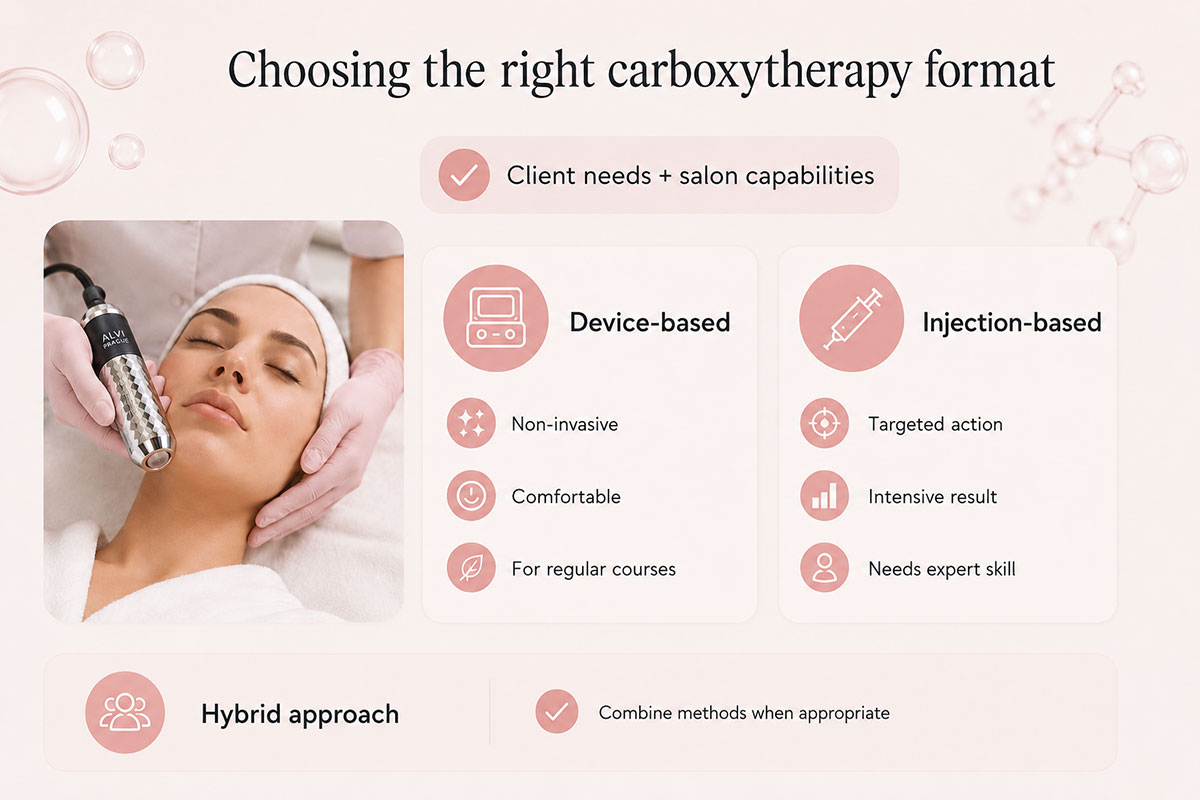
Before launching carboxytherapy, it is necessary to define its role in the price list. It may be a standalone procedure, a preparatory stage before other methods, part of an anti-aging course, a lymphatic drainage program, or a body contouring protocol. The procedure duration, course logic, price, and consultation script depend on this.
The first criterion is the concerns. For the face, this may include dull tone, puffiness, reduced tone, signs of fatigue, or support after other procedures. For the body, it may include cellulite, pastosity, localized aesthetic changes, reduced firmness, and work with the skin in body contouring programs.
The second criterion is the treatment areas. If the salon plans to work with both the face and body, separate protocols are needed. The same procedure scenario should not be applied to all areas: the skin around the eyes, abdomen, thighs, and décolleté area have different sensitivity levels and different concerns.
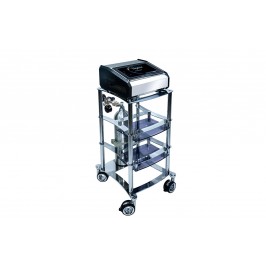
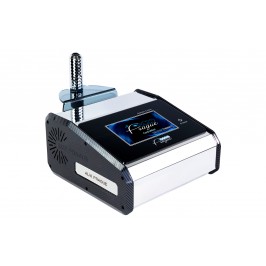
The third criterion is organization. It is necessary to determine who performs the procedure, whether training is required, how contraindications are recorded, how the skin response is assessed, and how often the client returns for the course. To select a carboxytherapy machine for the service format, you can go to the “Carboxytherapy machines” section or contact Alvi Prague for a consultation.
Which procedures carboxytherapy can be combined with
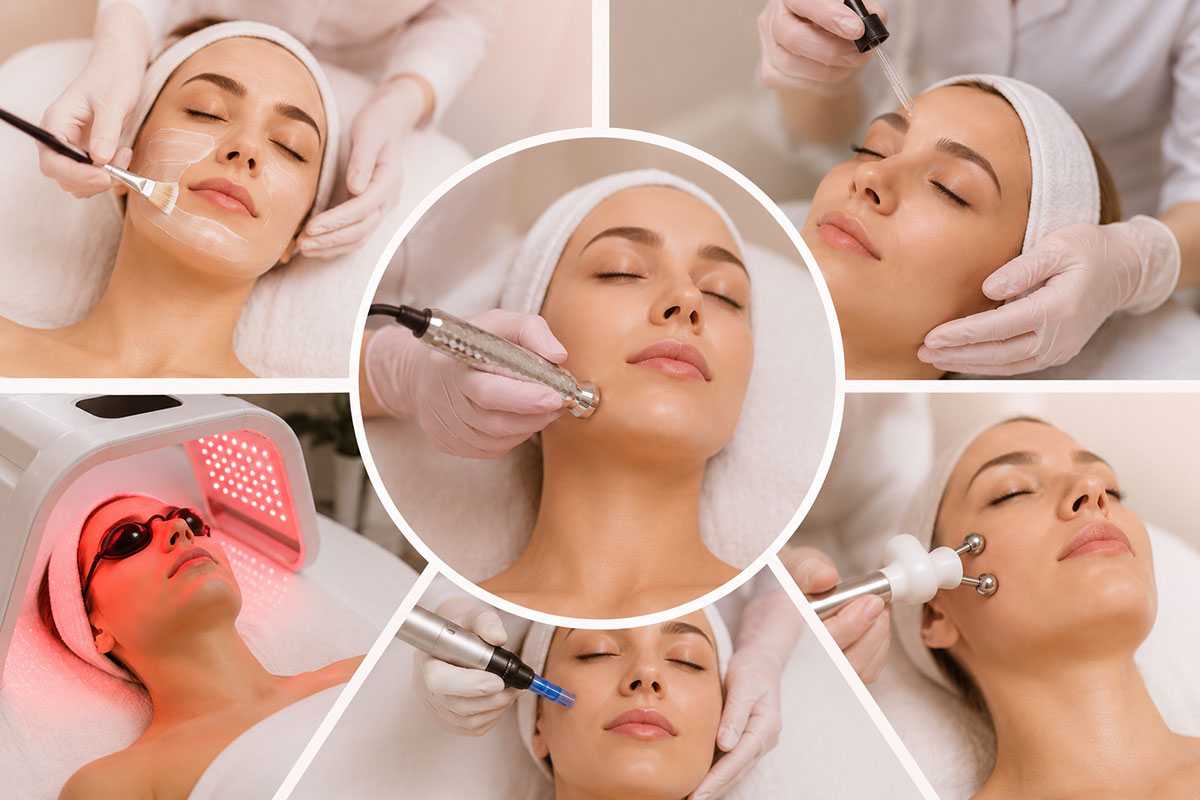
Carboxytherapy is often used as part of a course. This format allows a salon to create programs for specific concerns: skin tone, puffiness, cellulite, reduced firmness, lymphatic drainage, preparation for other procedures, or support after them.
|
Area |
Procedures |
Why they are combined |
|
Face |
RF, microcurrents, cleansing, peels |
Tone, skin care, anti-aging programs |
|
Body |
Pressotherapy, vacuum massage, body RF |
Cellulite, swelling, reduced skin tone |
|
Skin quality |
Microdermabrasion, skin care procedures |
Texture, color, overall skin condition |
In facial programs, carboxytherapy can be combined with procedures that work with tone, the skin surface, and microcirculation. In body programs, it is appropriate where there is swelling, cellulite, loss of firmness, or a need to support the skin during a body contouring course.
For the cosmetologist, it is important to consider intervals between procedures, skin sensitivity, seasonality, contraindications, and the client’s response after each session. If carboxytherapy is part of a combined course, its role must be explained clearly: what it does within the protocol, when it is used, and why the combination of methods is appropriate for this specific concern.
Frequently asked questions about carboxytherapy
What is carboxytherapy in simple terms?
Carboxytherapy is a cosmetology method that uses carbon dioxide, or CO₂, to work with the skin of the face and body. It is used in protocols for tone, puffiness, firmness, cellulite, and localized aesthetic changes.
How is device-based carboxytherapy different from injectable carboxytherapy?
The main difference is the method of action. Injectable carboxytherapy involves delivering CO₂ under the skin and requires medical training. Device-based carboxytherapy is used in skin care and aesthetic programs without injectable gas delivery.
Is carboxytherapy used for cellulite?
Yes, carboxytherapy may be included in body courses for cellulite, swelling, and reduced skin tone. In salon practice, it is often combined with RF, pressotherapy, vacuum massage, or lymphatic drainage.
How many procedures are needed?
The number of procedures depends on the concern, area, skin condition, client’s age, protocol, and other methods included in the course. The course should be determined after a consultation, not according to a universal scheme.

What carboxytherapy offers a salon or clinic
Carboxytherapy can be a standalone procedure or part of a face and body course. It works best within a service system: anti-aging care, lymphatic drainage, body contouring, support after peels, RF, or other device-based methods.
Before launch, it is necessary to define the procedure objectives, treatment areas, protocols, contraindications, consultation format, and the role of carboxytherapy in the price list. Without this, the service will remain vague: the client will not understand what it is needed for, and the specialist will not have a clear course logic.
For a salon, it is important to evaluate not only the method itself, but also how it fits into the work of the treatment room: workload, staff qualification, combination with other procedures, service support, and training. If a salon or clinic plans to introduce device-based carboxytherapy, it is worth choosing the equipment format according to the real needs of the business. To do this, you can view the “Carboxytherapy machines” section or contact Alvi Prague for advice on selecting a device.