Leg swelling in hot weather and the role of pressotherapy in lymphatic drainage
CONTENTS:
- Why legs swell more often in hot weather
- What lymphatic drainage is and why it matters for heavy legs
- How leg pressotherapy works
- How pressotherapy, manual lymphatic drainage, and LPG massage differ
- Who may benefit from pressotherapy in summer
- Contraindications and when medical consultation is needed
- How often to do pressotherapy and what to combine it with
- How a salon can add pressotherapy to its summer treatment menu
- When pressotherapy is appropriate in summer body care
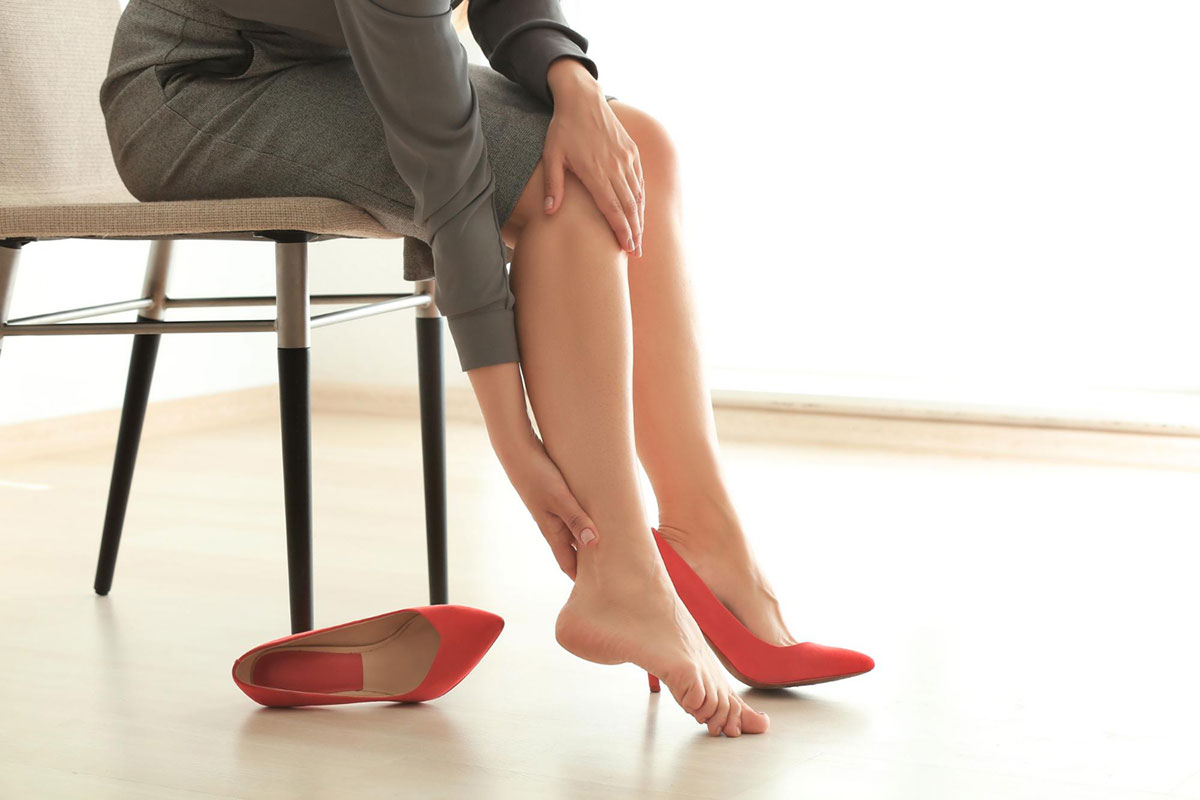
In hot weather, leg swelling occurs more often because blood vessels dilate, fluid drainage slows down, and the lower extremities experience increased strain. The issue can become more noticeable after prolonged sitting, standing work, flights, tight shoes, or insufficient physical activity. For the client, this may feel like heaviness, calf tension, sock marks, and discomfort by the end of the day.
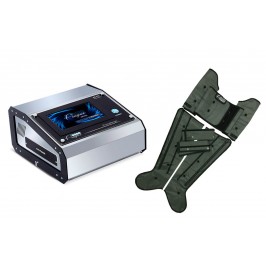
In cosmetology, lymphatic drainage techniques, including pressotherapy, are used to work with these manifestations. The device creates sequential pressure in the cuffs, imitating wave-like compression. This effect is used in body care programs, for clients prone to mild swelling, and in courses of hardware-assisted body contouring.
Pressotherapy does not replace medical diagnosis. If swelling is sudden, painful, one-sided, or accompanied by redness or shortness of breath, the client should consult a physician.
Why legs swell more often in hot weather
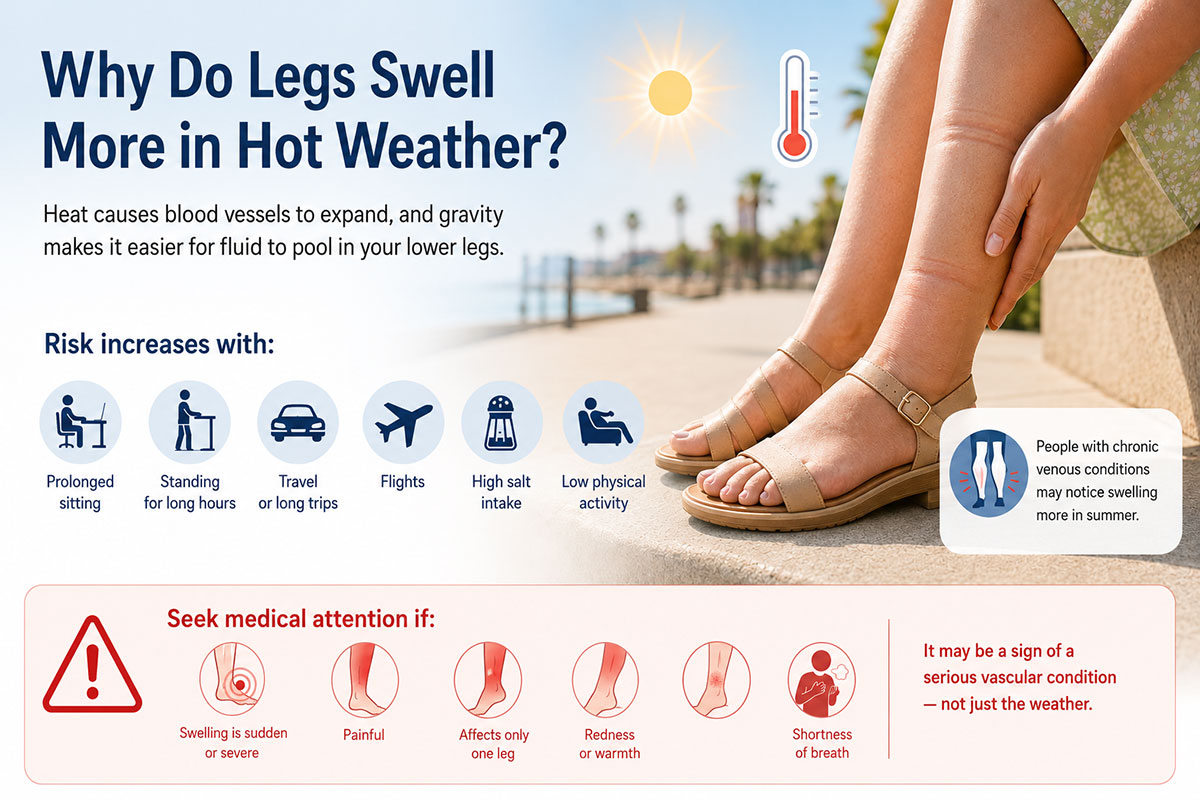
In warm weather, blood vessels dilate, and fluid is more likely to accumulate in the lower extremities under the influence of gravity. As a result, heaviness in the legs, calf tension, and marks from socks or shoes may appear by the end of the day. The risk increases after prolonged sitting, standing work, travel, flights, insufficient physical activity, and excess salt in the diet.
In patients with chronic venous disorders, swelling of the lower extremities often becomes more pronounced during the warm season. This is why summer brings more complaints about heavy legs, calf discomfort, and swelling around the ankles.
If swelling is sudden, painful, one-sided, accompanied by redness, shortness of breath, or a sensation of heat in the leg, medical consultation is required. Sudden swelling of one leg may be related not to the weather, but to an acute vascular condition.
What lymphatic drainage is and why it matters for heavy legs
Lymphatic drainage is an effect aimed at supporting the natural outflow of lymph and interstitial fluid. Normally, the lymphatic system helps remove excess fluid from tissues, but in hot weather, with low mobility, or after prolonged strain on the legs, this process may slow down. This is when sensations of fullness, heaviness, mild puffiness in the lower legs, and swelling around the ankles may appear.
In cosmetology, both manual and hardware-assisted lymphatic drainage are used. The manual technique depends on the specialist’s work, pressure level, and direction of movement. Hardware-assisted lymphatic drainage works through controlled mechanical action that can be adjusted by intensity, duration, and treatment zones.
For the summer season, lymphatic drainage procedures are valuable because they can be included in body care programs without aggressive impact on the skin. They are appropriate for heavy legs, after physical strain, before vacation, or as part of hardware-assisted body contouring courses.
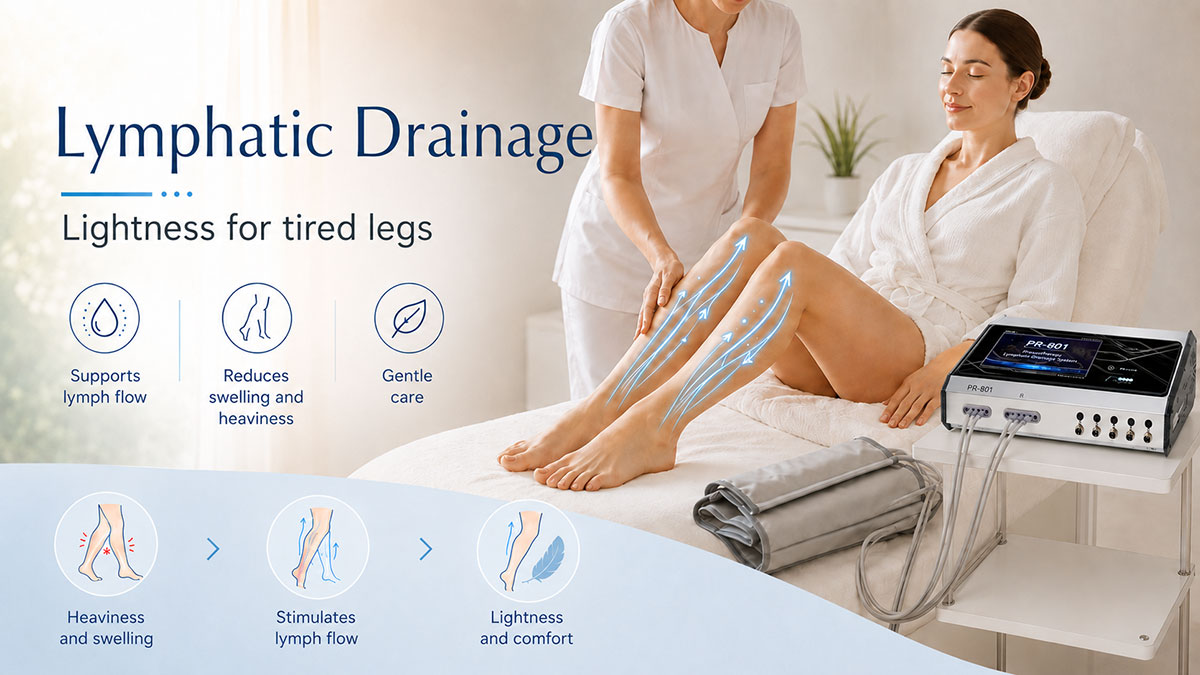
How leg pressotherapy works
Pressotherapy is a hardware-assisted technique in which special cuffs with air chambers are placed on the legs. The device supplies air sequentially, creating wave-like tissue compression. Compression usually moves upward from the feet and lower legs, following the natural direction of venous and lymphatic outflow.
In its principle of action, pressotherapy is close to intermittent pneumatic compression, or IPC. In clinical studies, this method has been evaluated for lower-limb phlebolymphedema. In particular, studies compared different pressure levels and noted that the outcome depends on compression parameters, course duration, and the patient’s baseline condition. Data on limb volume reduction should not be automatically applied to every salon procedure, but they help explain the mechanism of pneumatic compression itself.
In cosmetology, pressotherapy is used in lymphatic drainage programs, for heavy legs, for a tendency toward mild swelling, and in body care. The procedure does not traumatize the skin, requires no recovery, and fits well into a salon’s summer treatment menu.
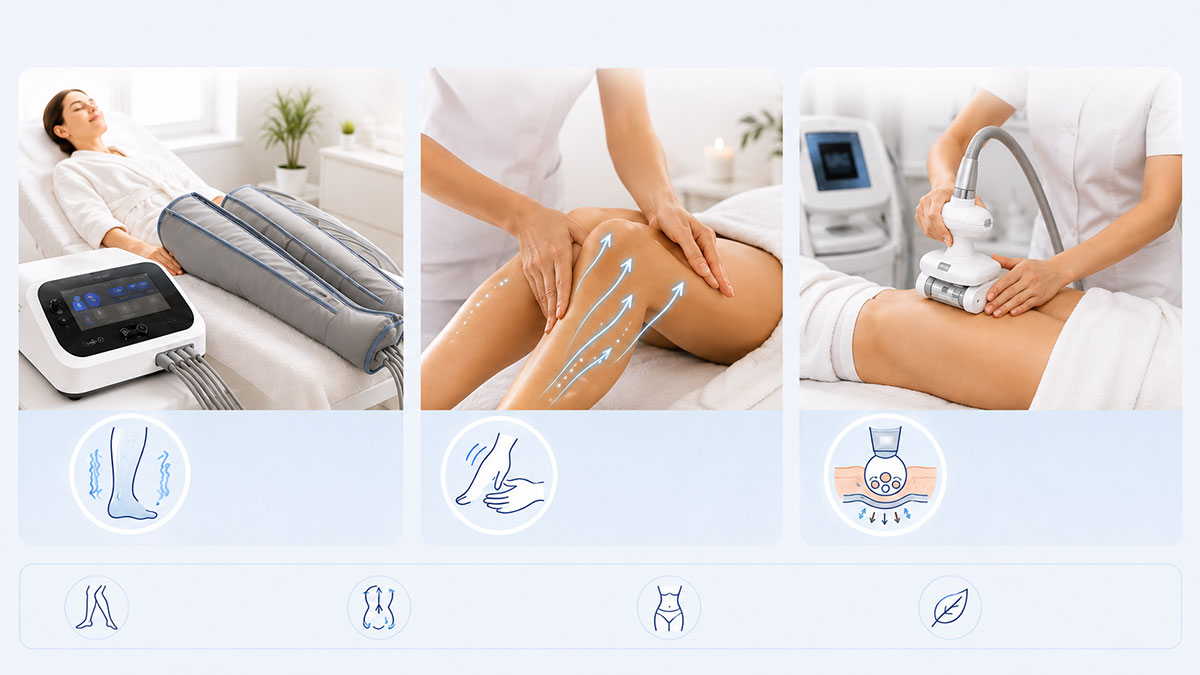
How pressotherapy, manual lymphatic drainage, and LPG massage differ
These techniques are often classified as lymphatic drainage and body care procedures, but their mechanisms of action differ. Pressotherapy works through controlled pneumatic compression, manual lymphatic drainage depends on the specialist’s technique, and LPG massage combines vacuum with the mechanical action of rollers.
| Method | How it works | When it is used | Key strength | Limitations |
|---|---|---|---|---|
| Pressotherapy | Cuffs sequentially compress tissues with wave-like pressure | Heavy legs, mild swelling, lymphatic drainage programs | Even impact and convenient course format | Requires contraindication screening |
| Manual lymphatic drainage | A specialist performs gentle movements following the direction of lymph flow | Delicate work with body areas | Individual control of pressure and pace | The result depends on the specialist’s qualifications |
| LPG massage | Vacuum and rollers mechanically work the tissues | Cellulite, skin tone, body contouring programs | Active work with tissue texture | May be uncomfortable in cases of sensitivity or vascular concerns |
For the summer season, pressotherapy is convenient because it does not irritate the skin and does not require recovery after the procedure.
Who may benefit from pressotherapy in summer
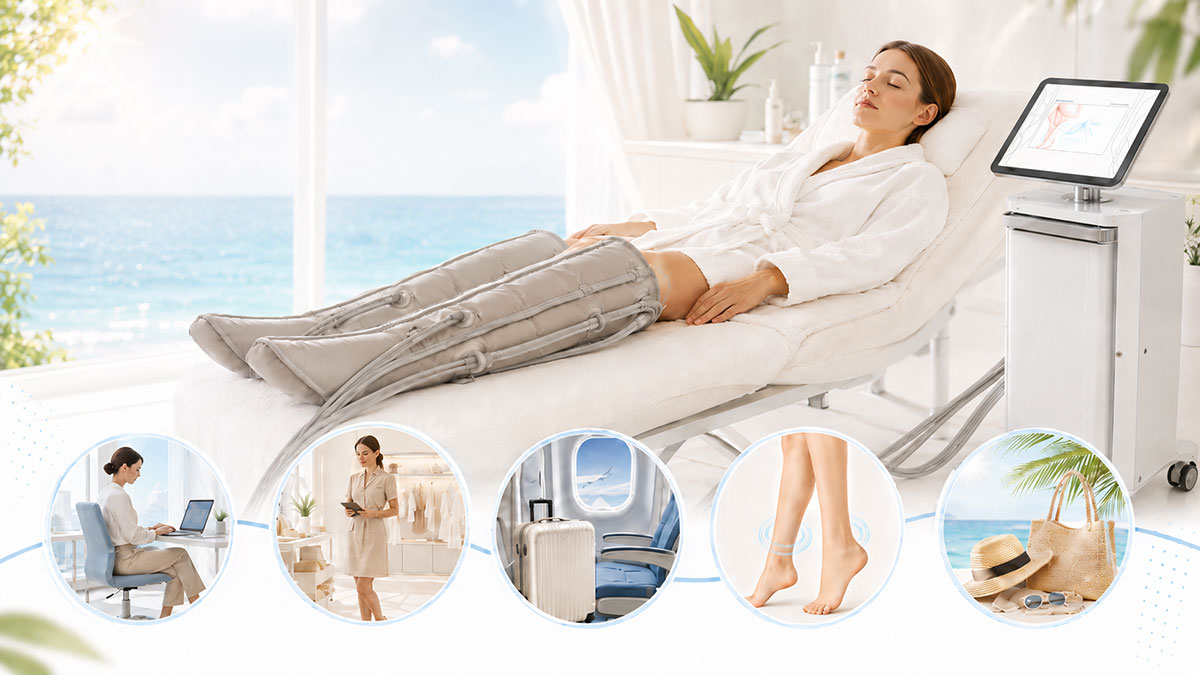
Pressotherapy is often included in summer body care programs for clients who complain of heavy legs, mild swelling after the workday, or discomfort after prolonged sitting. The technique is also appropriate for people who spend a lot of time on their feet, travel frequently, work in an office, or are preparing for vacation.
The procedure can be useful in hardware-assisted body contouring courses when a salon combines lymphatic drainage with techniques aimed at local fat deposits, cellulite, or reduced tissue tone. In such programs, pressotherapy does not replace the main procedure but complements it as a drainage stage.
Pressotherapy is most often considered in the following cases:
- heavy legs by the end of the day;
- mild swelling around the feet and ankles;
- sedentary or standing work;
- the period after travel or a flight;
- body care programs;
- preparation for the summer season.
Before a course, the specialist should clarify the client’s vascular condition, general well-being, and possible contraindications.
Contraindications and when medical consultation is needed
Before pressotherapy, the specialist should take the client’s history and clarify the condition of the vessels, the presence of chronic diseases, and the nature of the swelling. This is important because leg swelling may be not only a seasonal reaction to heat but also a sign of venous, lymphatic, or cardiovascular disorders.
The procedure is not performed or should be postponed in the following conditions:
- thrombosis or suspected thrombosis;
- pronounced varicose veins without physician approval;
- acute inflammatory processes;
- skin damage in the treatment area;
- decompensated cardiovascular diseases;
- oncological diseases;
- pregnancy without physician approval;
- elevated body temperature or feeling unwell.
One-sided swelling requires particular attention. If one leg has suddenly increased in volume, is painful, has become red, or feels hot to the touch, pressotherapy should not be performed. In this situation, the client should be referred to a physician. For a salon, this is a matter of safety, professional responsibility, and correct work with hardware-assisted techniques.

How often to do pressotherapy and what to combine it with
The frequency of pressotherapy depends on the course goal, the client’s condition, the severity of swelling, lifestyle, and the presence of contraindications. In salon practice, the procedure is often performed as a course because one session may provide a feeling of lightness, but a more stable effect requires repetition. Session duration, pressure intensity, and the number of procedures are determined by the specialist after consultation.
Pressotherapy can be combined with other hardware-assisted body techniques. In body contouring programs, it is often used as a drainage stage after procedures focused on local fat deposits, cellulite, or tissue tone. It can also be appropriately combined with light physical activity, proper hydration, and skin care.
It is important for a salon not to promise treatment for varicose veins, rapid weight loss, or complete cellulite elimination. Correct communication should sound different: pressotherapy supports lymphatic drainage programs, helps address the sensation of heavy legs, and may be part of summer body care.

How a salon can add pressotherapy to its summer treatment menu
In May and June, demand for body treatments increases because clients are preparing for vacations, wearing more open clothing, experiencing hot weather, and frequently complaining of heavy legs. Pressotherapy should be presented not as a separate “swelling treatment,” but as part of summer body care and lymphatic drainage programs.
It is convenient for a salon to create short courses or packages: leg pressotherapy after the workday, lymphatic drainage after travel, a program for office workers, or body care before vacation. These offers are clear to the client and do not contain medical promises.
In communication, it is better to focus on a feeling of lightness, lymphatic drainage support, comfort after strain, and the body care format of the procedure. Before starting a course, a consultation is required: the specialist clarifies complaints, lifestyle, vascular condition, contraindications, and the client’s expectations. This helps select a safe protocol and avoid creating unrealistic expectations.
When pressotherapy is appropriate in summer body care
Leg swelling in hot weather is often associated with blood vessel dilation, static load, and slower venous and lymphatic outflow. If a client complains of heavy legs, mild swelling after the workday, or discomfort after travel, pressotherapy may be an appropriate part of a summer body care program.
Hardware-assisted compression supports lymphatic drainage protocols, combines well with body contouring procedures, and requires no recovery after the session. For a salon, this is a convenient seasonal service that can be included in courses for office workers, clients with standing jobs, or those preparing for vacation.
The main condition is a proper consultation before the procedure. If swelling is sudden, painful, one-sided, or accompanied by other symptoms, the client needs a physician, not a cosmetology procedure.