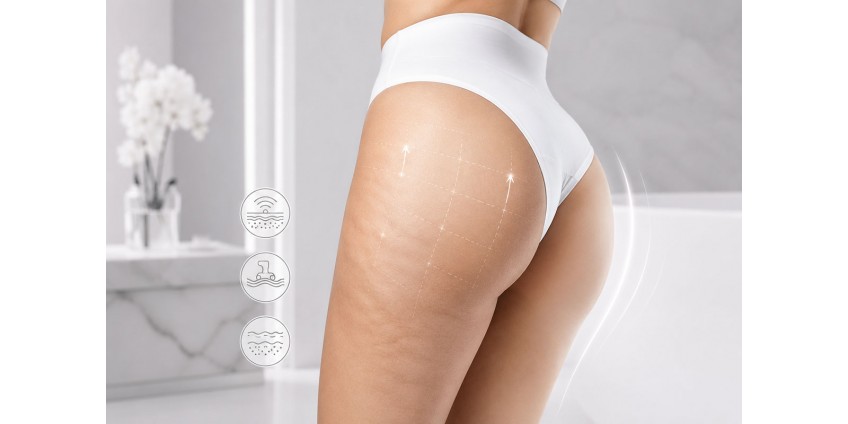
Cellulite and device-based body contouring methods for beauty salons
CONTENTS:
- What cellulite is and why it appears
- Types of cellulite and different client concerns
- Stages of cellulite and how they affect procedure selection
- What problems a salon solves in body contouring programs
- Device-based methods for cellulite correction
- Comparison of device-based methods for salons
- How to build a cellulite treatment course
- When not to start a course without an additional consultation
- How to choose equipment for body contouring programs
- Frequently asked questions about cellulite and device-based correction
- What to consider before launching body contouring programs in a salon
Cellulite is one of the most common concerns in body contouring programs. According to dermatological reviews, its signs are present in 80–90% of women after puberty, while some studies report prevalence of up to 98%. This does not mean that cellulite is always associated with excess weight. Its development is influenced by the structure of subcutaneous fat, the condition of connective tissue, microcirculation, lymphatic drainage, hormonal factors, age, and lifestyle.
For a beauty salon, cellulite is not a single concern but a group of different situations. One client may come in with swelling and a feeling of heaviness in the legs. Another may complain about uneven skin texture on the thighs or buttocks. A third may want to tighten the skin after weight loss. In each case, the course is built differently, so the specialist evaluates the type of cellulite, stage, tissue density, skin tone, and accompanying signs.
Device-based cosmetology gives salons several treatment directions: RF for the body to support skin tone and density, pressotherapy for lymphatic drainage, vacuum massage for mechanical work with the tissues, carboxytherapy to support microcirculation, ultrasonic methods for localized areas, and shockwave therapy for dense tissues. The salon’s task is not to promise complete removal of cellulite, but to build a course with clear logic, realistic expectations, and properly selected equipment.
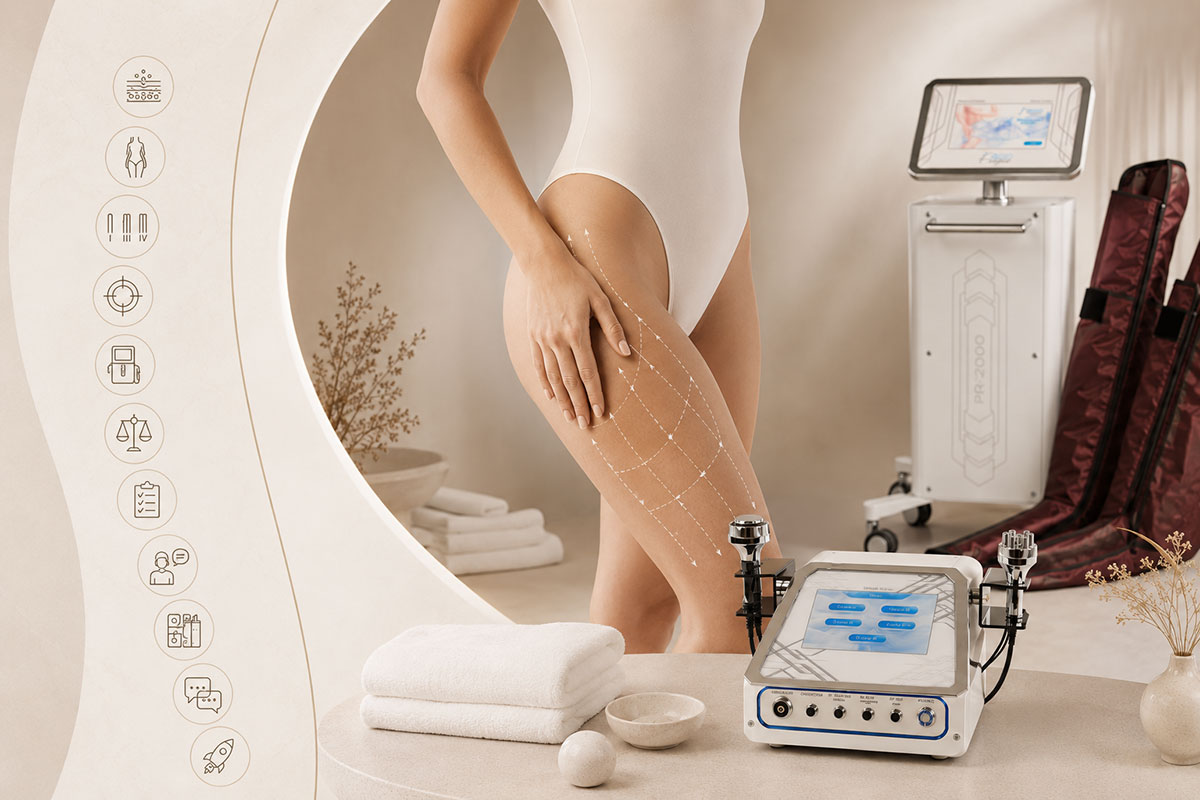
What cellulite is and why it appears
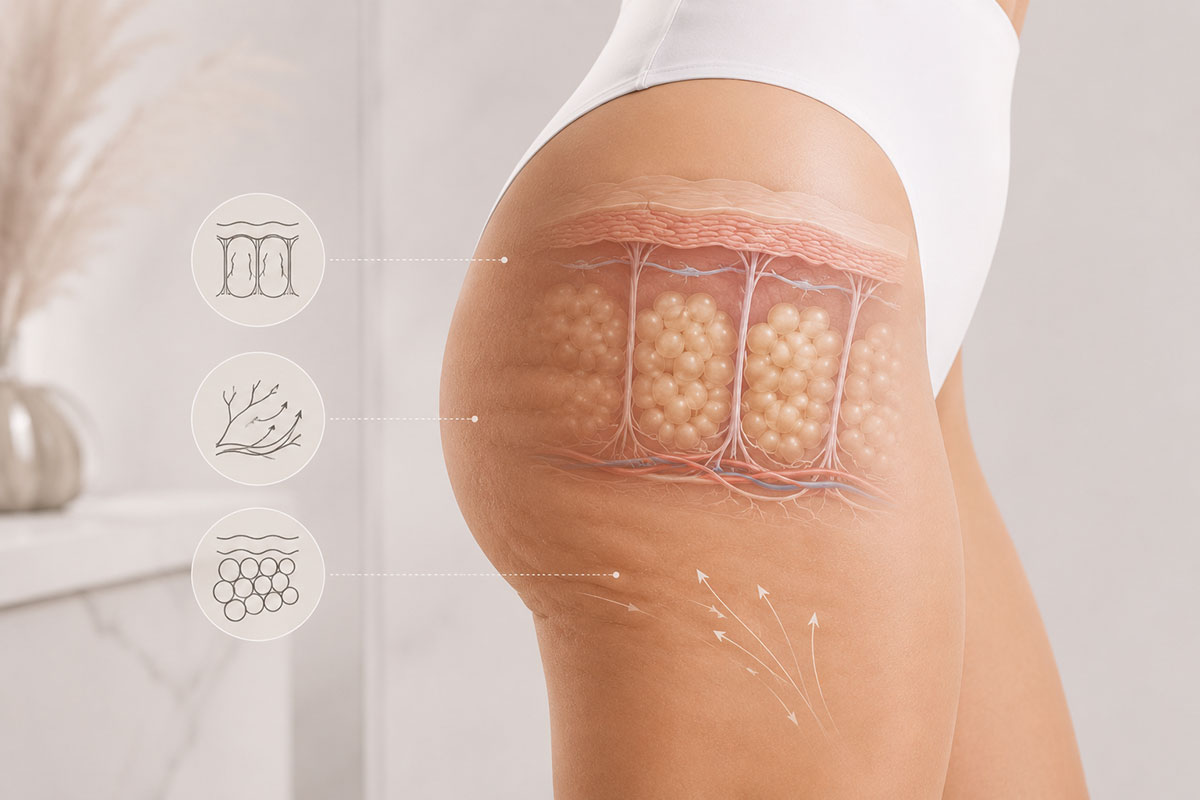
Cellulite is a change in skin texture in which unevenness, dimpling, and an “orange peel” effect appear on the thighs, buttocks, abdomen, or other areas of the body. In professional literature, this condition is also described as gynoid lipodystrophy. It can be visible even in people with a normal body weight, so it should not be reduced only to excess weight.
One of the causes is the anatomical structure of subcutaneous fat. In women, connective tissue septa are more often arranged vertically. Because of this, fat lobules can protrude toward the dermis and create an uneven surface. In men, the structure of these septa is different, which is why cellulite occurs much less often.
The severity of cellulite is influenced by microcirculation, lymphatic drainage, hormonal balance, the condition of collagen fibers, weight fluctuations, genetic predisposition, and the level of physical activity. Nutrition and movement matter, but they do not fully explain the problem. For a salon, this is part of the consultation: the client should understand that cellulite does not disappear after one procedure and requires a course-based approach.
In device-based correction programs, the specialist evaluates more than skin texture. Swelling, tissue density, skin tone, localized fat deposits, area sensitivity, and previous treatment experience are also important. These factors determine what will become the foundation of the course: RF, pressotherapy, vacuum massage, carboxytherapy, cavitation, shockwave therapy, or a combination of these methods.
Types of cellulite and different client concerns
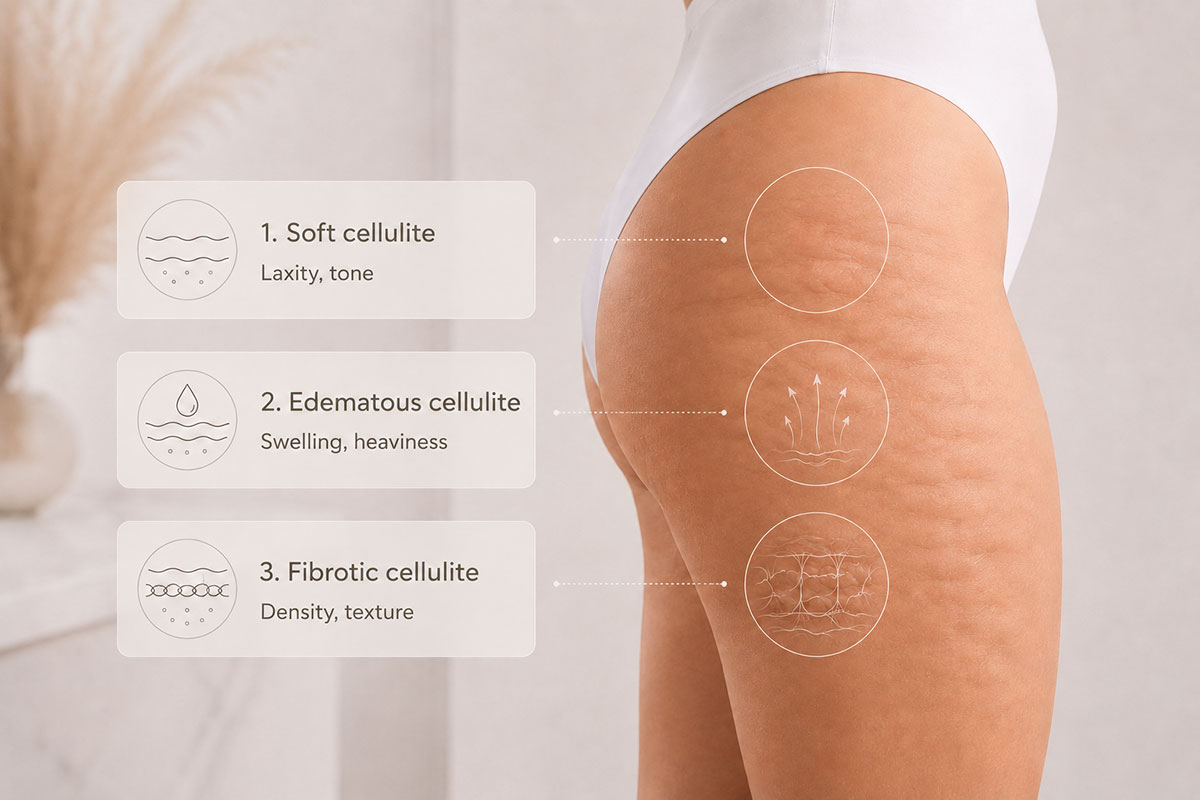
For a salon, it is useful to distinguish not only the stages but also the types of cellulite. Two clients with the same visual concern may need different procedures. One may have predominant swelling, another may have reduced skin tone, and a third may have dense fibrotic areas. If these differences are not taken into account, the course will be less precise.
|
Type of cellulite |
How it appears |
Course logic |
|
Soft cellulite |
Laxity, reduced tone, uneven texture, more common after age 35 or after weight changes |
RF, skincare procedures, carboxytherapy, tone support |
|
Edematous cellulite |
Pastosity, heaviness in the legs, fluid retention, pronounced tissue response |
Pressotherapy, lymphatic drainage, vacuum massage, controlled treatment intensity |
|
Fibrotic cellulite |
Dense areas, deeper skin texture changes, sometimes tenderness when pressed |
Vacuum methods, RF, shockwave therapy when indicated |
This classification makes the consultation more precise. With edematous cellulite, it is not advisable to start the course only with methods aimed at skin tone. With soft cellulite, lymphatic drainage can be useful, but without work on skin quality, the course will be incomplete. With fibrotic changes, a more careful tissue assessment and restrained communication about expected progress are required.
The type of cellulite also affects how the service is sold. It is easier for the client to agree to a course when they see the sequence: first drainage, then work on skin texture, and then tone support. This is perceived as more professional than a general offer of “cellulite treatments.”
Stages of cellulite and how they affect procedure selection
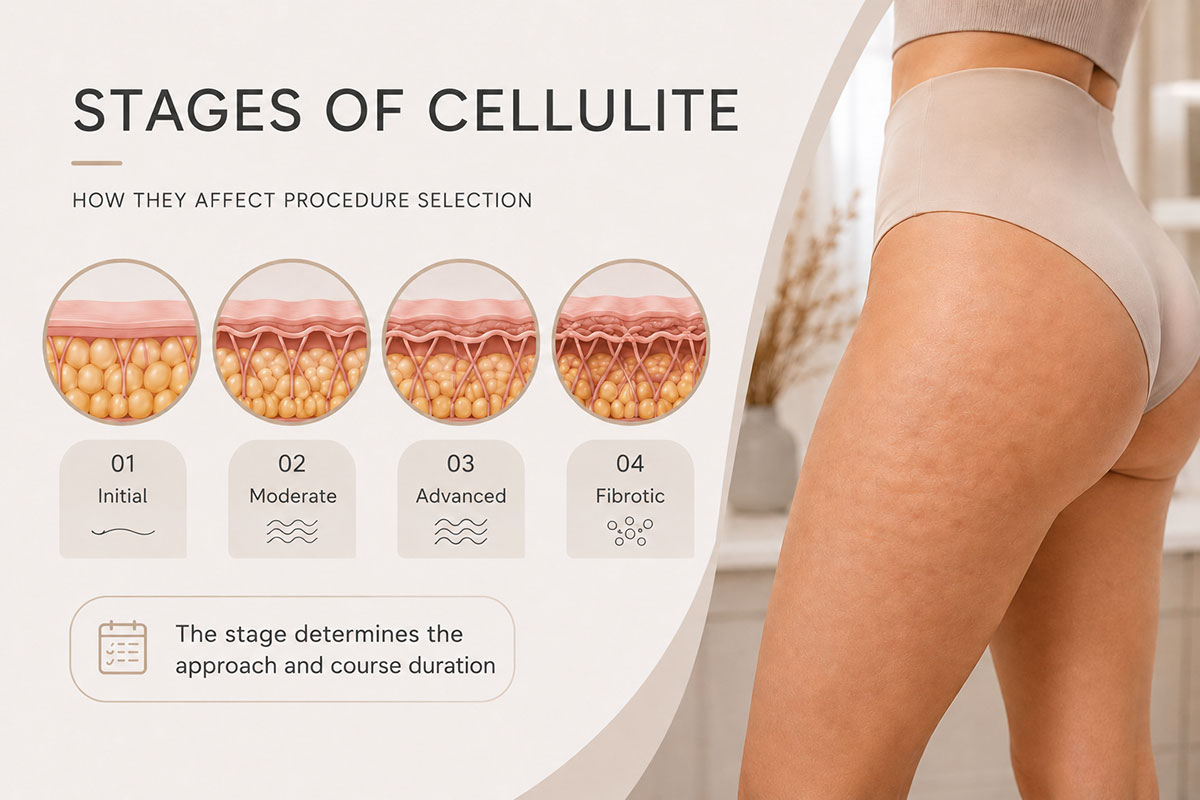
The stage of cellulite shows how pronounced the changes in skin texture, tissue density, and microcirculation are. For a salon, this is a practical reference point: based on it, the specialist determines whether a lymphatic drainage course is enough or whether RF, vacuum massage, carboxytherapy, or other device-based methods should be added.
|
Stage |
How it looks |
What to consider in the salon |
|
Initial |
Unevenness is visible only when the skin is compressed |
Preventive courses, lymphatic drainage, work on tone |
|
Moderate |
Texture changes are visible while standing; swelling may be present |
A combination of drainage and toning methods |
|
Pronounced |
Unevenness is visible without compression; tissues are denser |
A combination of procedures and an explanation of expected progress |
|
Fibrotic |
Dense areas, deeper texture changes, and sometimes tenderness are present |
A longer course and monitoring of tissue response |
At the initial stages, the client often expects fast visual improvement. At this point, it is not enough to limit the plan to a random procedure. If swelling is present, the course may begin with pressotherapy or another lymphatic drainage stage. If reduced skin tone predominates, adding RF is logical. If there is uneven texture and tissue density, the program may include vacuum or combined methods.
At advanced stages, the specialist’s main task is to explain the treatment plan. The client should understand what changes are possible, why a course is needed, how progress is assessed, and why the result depends on the type of cellulite, tissue response, lifestyle, and regularity of procedures.
What problems a salon solves in body contouring programs
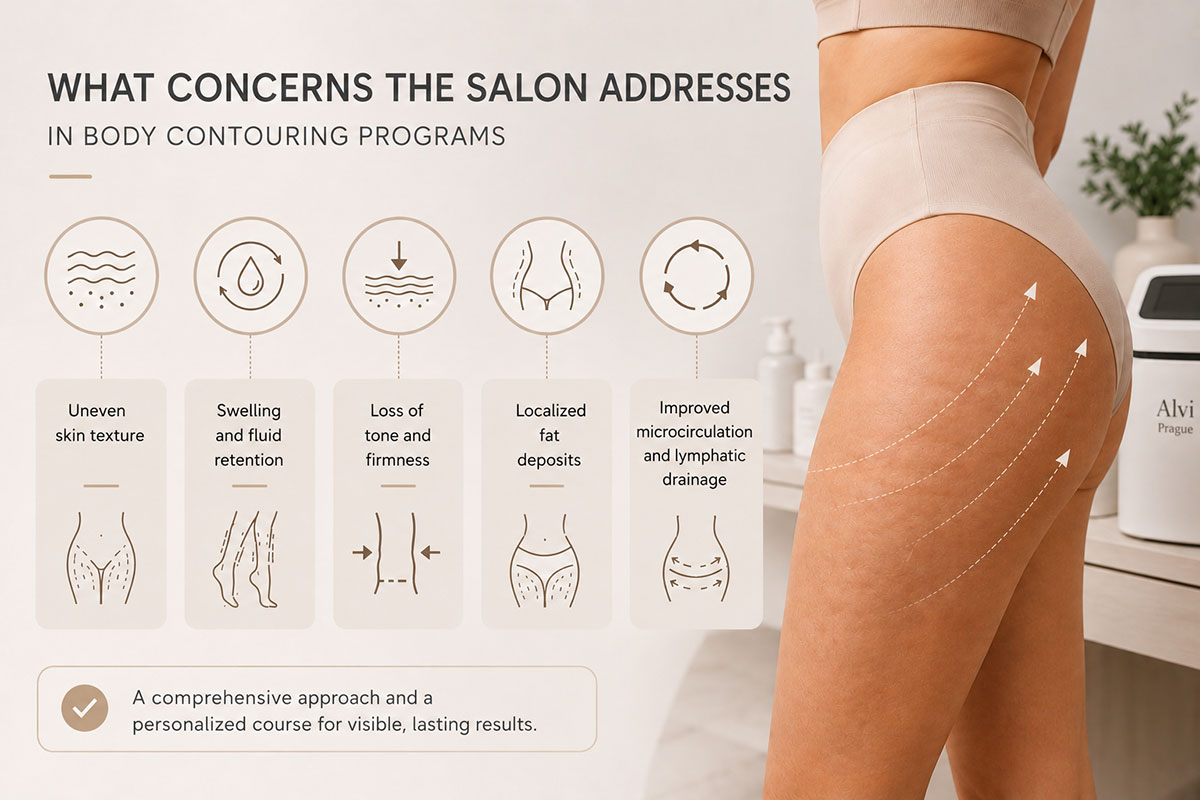
A client rarely comes in with a precise request for a specific technology. More often, they describe a problem: uneven skin on the thighs, swelling, loss of tone, localized changes after weight gain or weight loss, or a feeling of heaviness in the legs. The salon’s task is to translate this concern into a treatment program in which each method has its own role.
In body contouring programs, the salon works not only with cellulite. It is often necessary to address several factors at the same time: lymphatic drainage, microcirculation, skin tone, localized fat deposits, tissue density, and skin texture quality. If the client has predominant swelling, the course may begin with pressotherapy. If the problem is reduced tone, RF is appropriate to add. If the tissues are dense and the texture is pronounced, vacuum or more intensive methods may be needed.
For the business, it is better to create structured programs rather than individual “cellulite sessions.” For example, a course for the edematous type, a course for reduced tone, a course after weight loss, or a program for localized areas. This structure explains to the client why this specific combination of procedures was chosen and how progress will be assessed.
A separate task is managing client expectations. Device-based methods can reduce the visibility of cellulite and improve skin texture, tone, and condition, but they should not be presented as a way to “remove cellulite forever.” For a salon, an honest consultation is just as important as properly selected equipment.
Device-based methods for cellulite correction
Device-based cellulite correction is built around the client’s concern. If swelling predominates, a lymphatic drainage stage is needed. If the skin has lost tone, methods for working with the dermis are added to the course. If the tissues are dense and the texture is pronounced, the specialist may choose vacuum, RF, or shockwave protocols.
RF for the body
Radiofrequency therapy is used in body treatment programs when it is necessary to work with tone, skin density, and uneven texture. Studies of RF methods have described improvements in the appearance of cellulite, a reduction in the thickness of subcutaneous fat, and changes in dermal density indicators. For a salon, RF is valuable in programs where cellulite is combined with reduced skin firmness.
Pressotherapy and lymphatic drainage
Pressotherapy is appropriate for swelling, pastosity, heaviness in the legs, or signs of impaired lymphatic drainage. It does not replace RF or vacuum massage, but it can be an important stage of the course. In body contouring programs, it is often used at the beginning of treatment or between more intensive procedures.
Vacuum massage and LPG
Vacuum roller methods are used for mechanical work with tissues, skin texture, and localized areas. Studies of LPG and endermologie more often show better results in reducing body circumferences than in changing the cellulite grade itself. Therefore, in salon communication, this method is more accurately presented as part of a course for skin texture, lymphatic drainage, and tissue work.
Carboxytherapy
Carboxytherapy can be included in body courses when it is necessary to support microcirculation, lymphatic drainage response, and skin quality. It is appropriate for swelling, dull skin tone, reduced tone, and localized aesthetic changes. In body contouring programs, it can be combined with RF, pressotherapy, or vacuum massage.
Cavitation and ultrasonic methods
Ultrasonic methods are used in body treatment programs to work with localized fat deposits and circumferences. Studies of combinations of RF and ultrasonic cavitation have described circumference reduction in the treated area, but such procedures require clear indications and proper consultation. They should not be presented as a universal method for every type of cellulite.
Shockwave therapy
Shockwave therapy is used to work with dense tissues, fibrotic changes, and pronounced skin texture irregularities. Some studies describe improvement in cellulite severity indicators after a course of AWT, while other critical data show less convincing results. Therefore, this method is better presented as an option for specific clinical situations rather than as a basic procedure for every client.
Comparison of device-based methods for salons
For cellulite work, one technology is rarely enough for a salon. A client may have a combination of swelling, reduced skin tone, localized fat deposits, tissue density, and uneven texture. The method should be selected not by popularity, but by the problem it solves in a specific course.
|
Method |
Main action |
When it is appropriate |
What to combine it with |
|
RF for the body |
Skin tone, density, and quality |
Reduced tone, uneven texture, loss of firmness |
Carboxytherapy, vacuum massage, skincare procedures |
|
Pressotherapy |
Lymphatic drainage and work with swelling |
Pastosity, heaviness in the legs, edematous cellulite |
RF, carboxytherapy, vacuum massage |
|
Vacuum massage |
Mechanical work with tissues and texture |
Localized areas, tissue density, uneven skin surface |
RF, pressotherapy, carboxytherapy |
|
Carboxytherapy |
Support of microcirculation and skin quality |
Swelling, dull skin, cellulite, reduced tone |
RF, pressotherapy, skincare procedures |
|
Cavitation |
Work with localized fat deposits |
Localized volume when there are indications for an ultrasonic method |
RF, lymphatic drainage, pressotherapy |
|
Shockwave therapy |
Work with dense tissues and fibrotic changes |
Pronounced texture, dense areas, fibrotic cellulite |
Vacuum massage, RF, lymphatic drainage |
This table does not mix all procedures into one list. Pressotherapy does not work the same way as RF, and vacuum massage has a different purpose than cavitation. If the client has a predominantly edematous type, the course may begin with lymphatic drainage. If the main problem is loss of tone, it is more logical to add RF. If there are dense fibrotic areas, the specialist may consider more intensive methods with careful assessment of tissue response.
How to build a cellulite treatment course
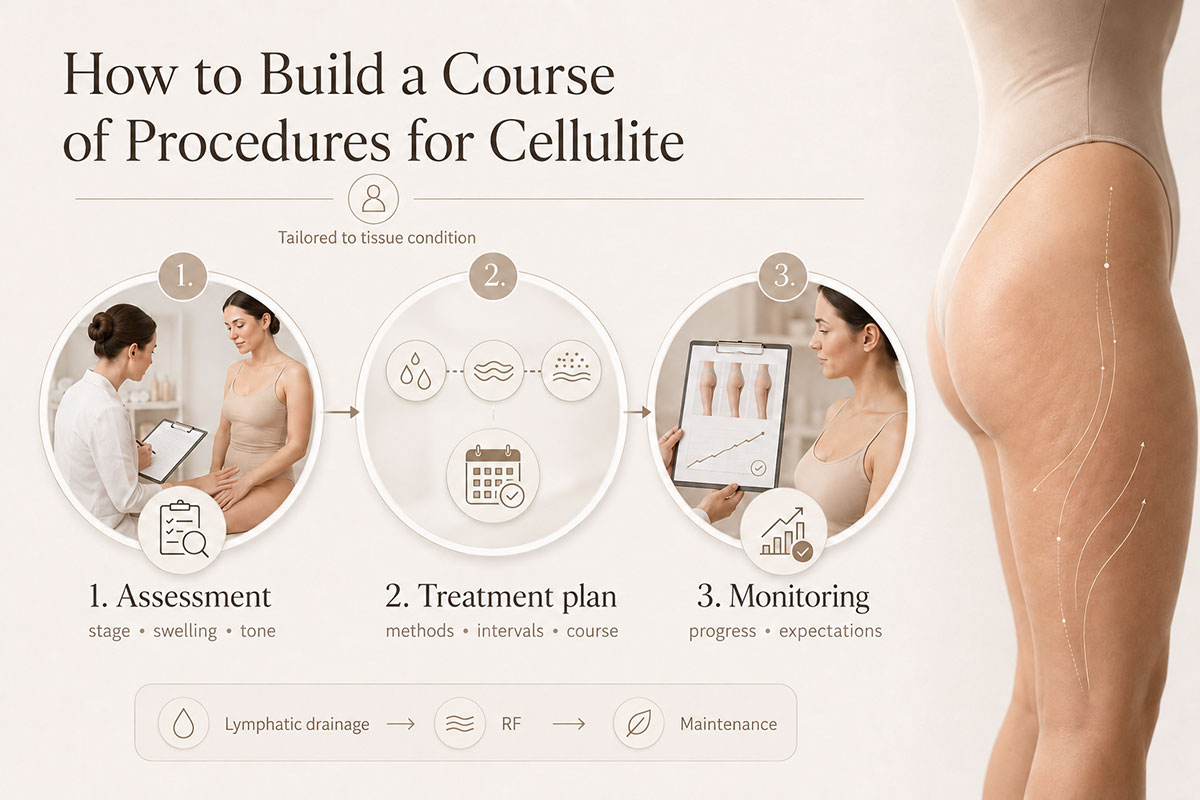
A cellulite treatment course begins not with choosing a device, but with assessing the condition of the tissues. The specialist should determine the stage of cellulite, the type of manifestations, the presence of swelling, the density of subcutaneous tissue, skin tone, and the areas that concern the client most. Without this assessment, it is difficult to understand what should become the foundation of the program.
The first stage is the consultation. At this stage, the specialist needs to collect the client’s history, clarify contraindications, assess lifestyle, weight fluctuations, level of physical activity, and previous experience with device-based procedures. If the client has pronounced swelling, it is worth starting with methods that support lymphatic drainage. If the main problem is reduced skin tone, RF should be included in the course. If there are dense areas and uneven texture, the program may require vacuum or more intensive device-based methods.
The second stage is building the course. The salon needs to define the number of procedures, intervals, sequence of methods, and criteria for assessing progress. For example, a course may consist of a lymphatic drainage stage, procedures for working with tone, and maintenance sessions. This scheme is clearer for the client than a random set of procedures without explanation.
The third stage is managing expectations. The client needs to understand that device-based methods can reduce the visibility of cellulite and improve skin texture, tone, and condition, but the result depends on the stage, type of cellulite, course regularity, and individual tissue response.
When not to start a course without an additional consultation
A salon body contouring program begins with a client questionnaire. The specialist should clarify the general state of health, previous procedures, skin sensitivity, tendency to swelling, the presence of implants in the treatment area, vascular problems, medication use, and previous experience with device-based methods.
The final list of contraindications depends on the specific device, technology, and manufacturer’s instructions. If the specialist sees an atypical tissue response, pronounced pain, inflammation, sharp asymmetry, suspected vascular problem, or any doubt about procedure safety, the course should not be started until the client has an additional consultation with a physician.
This section does not reduce sales. On the contrary, it increases trust in the salon. The client sees that the specialist is not selling the procedure under any circumstances, but is working with tissue assessment, indications, limitations, and the expected outcome.

How to choose equipment for body contouring programs
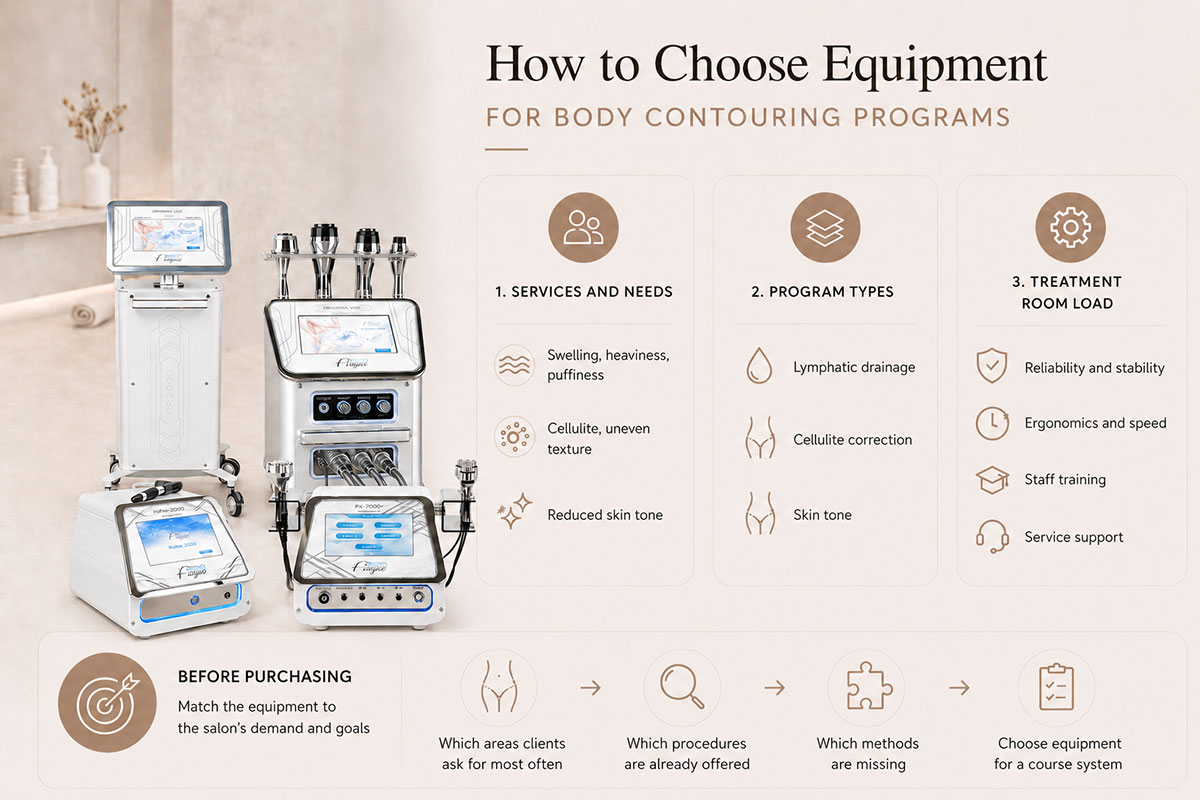
The choice of body contouring equipment should begin not with the name of the technology, but with the services the salon plans to develop. If the main client requests involve swelling, heaviness in the legs, and tissue pastosity, it is logical to consider lymphatic drainage methods and pressotherapy. If clients more often come in with reduced skin tone and uneven texture, RF or combined device-based protocols may be a priority.
The second criterion is the type of programs. For a basic body treatment direction, several clear courses are enough: lymphatic drainage, cellulite correction, skin tone, and care after weight loss. For a clinic or salon with a strong device-based treatment direction, it is advisable to create multi-stage programs: drainage, work on skin texture, tone support, and skincare procedures.
The third criterion is treatment room workload. If the device is used every day, service life, stable operation, ergonomics, procedure preparation speed, staff training, and service support matter. For a salon owner, these factors affect the appointment schedule, procedure cost, and quality of the specialist’s work.
Before purchasing, body contouring equipment should be compared with the real structure of demand: which areas clients request most often, which procedures are already available in the salon, and which methods are missing for a complete course. If the salon plans to launch body treatments as a separate service direction, it is better to choose a device not for one procedure, but for a system of courses.
Frequently asked questions about cellulite and device-based correction
What is cellulite in simple terms?
Cellulite is a change in skin texture in which unevenness, dimpling, and an “orange peel” effect appear. It is associated not only with weight, but also with the structure of subcutaneous fat, the condition of connective tissue, microcirculation, lymphatic drainage, and hormonal factors.
Can cellulite be removed with device-based procedures?
Device-based methods can reduce the visibility of cellulite and improve skin texture, tone, and condition. The result depends on the stage, type of cellulite, course regularity, lifestyle, and tissue response. It is more accurate to speak not about complete removal, but about managing visible signs.
Which procedure is best for cellulite?
There is no single universal procedure. If swelling predominates, pressotherapy or other lymphatic drainage methods may be included in the course. If there is reduced skin tone, RF should be considered. With dense tissues and pronounced texture changes, vacuum or shockwave methods may be used.
Which is better for cellulite, RF or pressotherapy?
RF and pressotherapy solve different problems. RF is more often used to work with skin tone, density, and quality. Pressotherapy is more closely associated with lymphatic drainage, swelling, and heaviness in the legs. In body contouring programs, these methods can complement each other.
Does carboxytherapy help with cellulite?
Carboxytherapy can be included in body courses when it is necessary to support microcirculation, lymphatic drainage response, and skin quality. It does not replace RF, pressotherapy, or vacuum massage, but it can be part of a combined program for cellulite, swelling, and reduced tone.
How many procedures are needed for cellulite correction?
The number of procedures depends on the stage of cellulite, type of manifestations, treatment area, client’s age, skin condition, and selected methods. The salon should determine the course after a consultation rather than offer the same protocol to every client.
Is one procedure enough for a visible effect?
One procedure can provide a temporary feeling of lightness or improvement in tissue condition, especially when swelling is present. A course is usually needed to work with skin texture, tone, and pronounced signs of cellulite.
How should a salon explain the result of device-based correction to a client?
The client should be honestly informed that device-based correction works with visible signs of cellulite, skin texture, tone, and swelling, but does not permanently change the anatomical features of the tissues. The best approach is a consultation in which the specialist shows the stage, explains the course plan, and defines realistic assessment criteria.

What to consider before launching body contouring programs in a salon
Body contouring programs should function as a separate service direction. Before launching, the salon needs to determine which concerns it will work with most often: cellulite, swelling, reduced skin tone, localized fat deposits, dense tissues, or care after weight loss. The choice of methods, protocols, and equipment depends on this.
The second step is to create several courses for different client types. For example, the salon can separately define a program for the edematous type, a program for reduced tone, a course for localized areas, and a combined course for pronounced texture changes. This structure does not sell a random procedure, but shows the client the logic of the course.
The third step is to prepare the consultation. The client needs to understand that device-based methods can improve skin texture, tone, swelling, and the external condition of the skin, but they do not cancel the anatomical features of the tissues. This communication reduces the risk of inflated expectations and increases trust in the salon.
For the business owner, staff training, service support, treatment room workload, procedure cost, and the ability to combine methods in one course are important. If the salon plans to develop body contouring as a service direction, the device should be selected not for a single procedure, but for a system of services: lymphatic drainage, work with tone, skin texture, and localized areas. For a consultation, you can contact Alvi Prague and choose a device for the salon’s needs.